On Tuesday, February 24, President Donald Trump will take the stage for his State of the Union address. After a first year heavily focused abroad, he will attempt to project strength—boasting of military action across the globe, economic sanctions on those he claims have taken advantage of the United States, and the dismantling of government agencies and organizations under the false pretense of “efficiency.” Trump will likely claim that he has restored American dominance through the exercise of absolute power, but this badly confuses belligerence for strength.
A review of Trump’s second-term foreign policy decisions in the Center for American Progress’ “Trump Global Weakness Watch” reveals a president whose actions have actively undermined sources of American power. The Trump administration has pushed the boundaries of executive authority, often in legally dubious or outright illegal ways, wielding it without the consent of Congress or the American public—in foreign policy as in other realms. In doing so, it has rapidly and unilaterally eroded historic sources of American strength, diminishing the United States’ ability to apply its power in the world for the benefit of the American people.
The Trump administration has pushed the boundaries of executive authority, wielding it without the consent of Congress or the American public. In doing so, it has rapidly and unilaterally eroded historic sources of American strength.
A nation’s strength is not measured by force alone; it comes from predictability, trust, credibility, alliances, and stable economic partnerships. As cornerstones of foreign policymaking over generations, these qualities have been sustained because of, not despite, deliberate checks and balances that favor sober decision-making. When these mechanisms are bypassed or eroded, as Americans have seen in the past year, foreign policy and the use of force become impulsive, politicized, personalized, and strategically incoherent.
President Trump’s governing style is an exemplar of personalized power, and he has isolated the United States, ruptured long-standing alliances, and handed strategic advantages to adversaries. While the U.S. Supreme Court has historically ruled that the president has great latitude in foreign affairs, this power is not absolute; the Trump administration has deliberately bypassed congressional authority in the most egregious of its foreign policy actions. While Trump may claim that might makes right, Congress should insist instead that “right makes might” and that a system of checks and balances is essential both to America’s democracy and to its strength in the world. This is not only a mandate in principle but a popular one as well: Only 37 percent of Americans approve of Trump’s foreign policy, and 70 percent believe that the president should consult Congress on matters of war.
37%
Share of Americans who approve of Trump’s foreign policy
70%
Share of Americans who believe the president should consult Congress on matters of war
Reckless military action has undermined U.S. interests abroad
Over the past year, one of the clearest dangers of unbounded executive authority has been the Trump administration’s use of military force. The most extreme example is the military action to capture Venezuelan President Nicolás Maduro and seize Venezuela’s oil sector. While Maduro was no doubt a brutal dictator, this was a plan carried out without public debate, congressional authorization, or any viable blueprint for interim governance or an exit plan. Without strategy or coordination across agencies or with regional partners, the plan generated international condemnation and deep reputational damage for the United States, with only one-third of Americans approving the action. Similarly, the Trump administration has carried out lethal boat strikes in the Caribbean without proper legal authority, both leading up to and since the Maduro capture. To date, these strikes have effectively amounted to the extrajudicial killing of more than 130 individuals. Rather than projecting strength, these actions have signaled recklessness and lawlessness.
Similarly, in June 2025, the Trump administration ordered military strikes on Iran without congressional approval—or even consultation. Trump claimed that the strikes “obliterated” Iran’s nuclear program, but its highly enriched uranium stockpile survived. Worse, the strikes set back diplomatic efforts to come to an agreement on Iran’s nuclear program—efforts to which the Trump administration has now returned. While the initial strikes were limited in nature, Trump has doubled down on military options, making threats that he would strike the Islamic Republic during its brutal crackdown on protestors and sending not one but two carrier strike groups to the Middle East as talks resumed. In his address to Congress, Trump may well claim that he put a nail in the coffin of Iran’s nuclear program, but more likely than not, his actions have reinforced incentives for the Iranians to pursue nuclear weapons capabilities and raised the risk of a more costly regional conflict.
The Trump administration has used the military in an ad hoc manner, making threats and carrying out actions that have weakened alliances, emboldened adversaries, and undermined U.S. credibility.
The Trump administration’s reckless use of military force should be considered against the backdrop of its efforts to purge any potential voices of dissent from national security institutions, including the military. The administration has removed senior military officers, including senior judge advocates general (JAGs), who could act as internal checks on the lawful use of force. Indeed, at least one current JAG raised concerns about Trump administration strikes on drug-smuggling boats but was ignored by senior officials. The administration has similarly flouted Congress’ constitutional authority to approve overseas military action—a requirement that is not intended to prevent the United States from using military force where necessary, but one that ensures decisions are subject to scrutiny and debate while remaining grounded in the national interest. Most importantly, military action must have the support of the American people. In the absence of these guardrails, the Trump administration has used the military in an ad hoc manner, making threats and carrying out actions that have weakened alliances, emboldened adversaries, and undermined U.S. credibility.
Economic coercion has damaged trade partnerships that benefited Americans
President Trump will no doubt tout his whiplash tariff policies as demonstrations of strength and brag about the many “deals” his administration has negotiated. But the reality is that, in just a year, the Trump administration has eroded America’s historic power to set the terms of the global economy—an economy that has long relied on the American market for global trade in goods, with the U.S. dollar as its currency. Trump’s unpredictable tariff threats generated uncertainty among some of the United States’ closet trading partners, pushing them to diversify away from U.S. markets and U.S. goods. This has led to measurable losses in U.S. agricultural market share, disruptions in manufacturing supply chains, and openings for China to present itself as a more reliable economic partner.
The Trump administration’s approach has weakened America’s ability to coordinate with allies and partners—critical for ensuring access to markets and supply chains and for countering China’s unfair practices, such as dumping, so that American industries can remain competitive with their Chinese counterparts. Trump has continually proven to be a duplicitous negotiating partner, threatening new tariffs on America’s traditional allies, including those who have already concluded trade deals with his administration. Far from the manufacturing sector “roaring back” as Trump promised, the United States has lost more than 100,000 manufacturing jobs over the past year. These actions have pushed the country’s closest trading partners to seek deals elsewhere, including with China: Canada, India, Japan, South Korea, and the European Union have all recently sought new agreements without the United States. Over time, each of these deals will result in markets that were once enjoyed by U.S. suppliers increasingly oriented away from them—and the rules of international engagement increasingly written by foreign governments.
Already, everyday Americans are paying the price through higher costs at the store, fewer jobs, and ever more uncertainty. Indeed, almost 70 percent of Americans believe 2026 will be a year of economic difficulty. While Congress has passed laws that grant the executive branch latitude to apply tariffs, these tools are most effective when used as part of a coordinated strategy in consultation with Congress. Deployed impulsively by an inconstant president without oversight, they have become blunt instruments that damage long-standing partnerships built over generations.
See also
The administration has remade national security institutions to prioritize loyalty above qualifications
Across the government, the Trump administration has removed, sidelined, or replaced independent civil servants, career diplomats, and seasoned national security professionals with individuals selected primarily for political loyalty. Cuts, purges, and resignations across the State Department, U.S. Agency for International Development, and intelligence and defense agencies have hollowed out essential capabilities. In the past year, more than 300,000 federal employees have left the government, taking with them the regional expertise, diplomatic continuity, and institutional memory to prevent poor or dangerous decisions. Meanwhile, across the Armed Forces, the Trump administration has politicized the chain of command through its firings and interventions in promotions. And these trends will likely continue. Already, the Office of Personnel Management issued a February 2026 policy that strips federal employees of work protections.
In the past year, more than 300,000 federal employees have left the government, taking with them the regional expertise, diplomatic continuity, and institutional memory to prevent poor or dangerous decisions.
The Trump administration has taken these actions, in a great many instances, despite laws establishing agencies or congressional appropriations for programmatic funding—while Congress did approve recissions requests for some funding, it only did so after the Trump administration had halted funding in critical areas. In his address to Congress, Trump will likely continue to frame these cuts as in the interest of “efficiency,” but despite the scale of the reduction in workforce, they have brought no discernible savings to the taxpayer. In fact, they have caused economic strife in communities where layoffs were most concentrated. They have also risked the political independence of U.S national security institutions that should make operational decisions based on the public interest, not out of fear of retribution from the president. Foreign adversaries are surely paying close attention when seasoned diplomats are replaced by loyalists with little experience, when expert analysis is ignored, and when politicization reaches intelligence assessments and military appointments.
Congress must reassert its constitutional authority
As the second Trump administration marks its first year in office, it has vindicated a principle that America’s Founding Fathers recognized 250 years ago: When foreign policy becomes the domain of the president alone, the United States becomes weaker. No president should be able to unilaterally launch impulsive military strikes, destabilize global markets, alienate allies, and erode institutions that form the backbone of American power.
President Trump’s projection of power at the State of the Union may be loud, forceful, and familiar, but it will not reflect reality. After a year of eroding American power and strength, the Trump administration has only delivered a more dangerous world, increased economic uncertainty, and higher prices. European allies’ united front against U.S. seizure of Greenland and protests in Minnesota have forced Trump to retreat, demonstrating that true strength is rooted in principles, not absolute power. Congress must continue to carry this mantle—ensuring that this and any future administrations operate within a system grounded in accountability, deliberation, and democratic oversight.
Trump Global Weakness Watch
-
-
-
-
-
President Trump signs an executive order pausing nearly all U.S. foreign assistance for 90 days. Foreign assistance accounts for less than 1 percent of the federal budget, and its interruption results in the deaths of hundreds of thousands of people around the world by mid-2025. The cuts affect Americans at home, with credible estimates suggesting as many as 250,000 Americans may be out of work due to the cuts. The cuts have also led to $23 billion in export losses and greater global risks of pandemic disease, conflict, and instability.
Learn more.
The Trump administration announces its withdrawal from the WHO, blaming it for mishandling the COVID-19 pandemic. This abandons America’s seat at the table, losing influence over global health decisions and the ability to coordinate to effectively address global public health threats.
![]()

On his first day in office, Trump issues an executive order to withdraw the United States from the Paris Agreement, stopping U.S. implementation of the compact that underpins multilateral climate cooperation and signaling a retreat from global climate leadership.
Learn more.
Trump issues a presidential action to revoke any active security clearances held by 51 government officials associated with a 2020 public letter about Russian election interference. The order is seemingly an attempt to punish and intimidate current and former officials the president perceives as political opponents, using control of security clearances to threaten their livelihoods. These revocations directly undermine current officials’ ability to independently investigate and raise concerns about election interference, leaving Americans more vulnerable to Russian or other foreign influence operations.
National Security Adviser Mike Waltz removes about 160 NSC career staffers—primarily federal employees from agencies such as the U.S. State Department, the FBI, and the CIA—sending them back to their home agencies without replacements. The move impedes interagency coordination, weakening the United States’ ability to effectively pursue national security interests.
The CIA suspends 51 officers who had been temporarily assigned to diversity, equality, inclusion, and accessibility (DEIA) roles, shortly after the Trump administration ordered the elimination of DEIA programs across the federal government. None of the affected officers are specialists in recruiting or diversity, and America risks losing experienced talent who protect the American people.
In a “Friday night purge,” Trump fires about 17 independent inspectors general across various government agencies. This weakens independent oversight across national security and intelligence activities, putting American personnel at direct risk of ethical violations or legally dubious military operations.
The U.S. Treasury Department announces it will lift sanctions against Israeli settlers
accused of violence in the occupied West Bank, where settler violence has
claimed the lives of Palestinians, Americans, and others. One of the settlers who is granted sanctions relief, Yinon Levi, goes on to allegedly
kill Palestinian activist Awdah Hathaleen in the West Bank on
July 18, 2025. The lifting of sanctions against these individuals sends a message of impunity for human rights abuse and risks emboldening violence that destabilizes the West Bank and puts Americans and others directly in harm’s way.
Trump signs executive order 14183, “Prioritizing Military Excellence and Readiness,” directing the Department of Defense to ban transgender Americans from military service. The ban leads to the removal or forced retirement of thousands of active-duty service members serving in good standing, including distinguished officers serving in or leading U.S. forces in combat zones. This purge results in the loss of experienced, highly trained personnel—including pilots, hard-target linguists, and cyber specialists. This action exacerbates existing talent shortfalls and impairs readiness.
The Trump administration sends a formal note to the U.N. secretary-general announcing the revocation of $4 billion in U.S. pledges to the GCF. By walking away from international climate finance, the administration not only weakens global efforts to fight climate change but also increases the costs Americans will face from climate-fueled instability.
The Department of Homeland Security announces the termination of Temporary Protected Status (TPS) for Venezuela; since then, it has also ended TPS for Haiti, Nicaragua, Honduras, Afghanistan, and Cameroon, with other conflict-affected states at risk of termination. As legal challenges continue, these sudden terminations force millions of vulnerable people back to countries they once fled, exposing them to life-threatening dangers. Not only do these actions dismantle decades of a bipartisan humanitarian precedent, but communities across the United States lose valuable contributors to the workforce and public life.
Trump signs an executive order pulling the United States out of the U.N. Human Rights Council and cuts all funding to the U.N. Relief and Works Agency. This reckless move dismantles decades of bipartisan U.S. leadership on human rights and humanitarian aid, leaving authoritarian regimes unchecked and millions of vulnerable people without critical support. By walking away from these institutions, Trump isolates America, erodes its moral authority, and hands adversaries an opening to rewrite global norms.
![]()
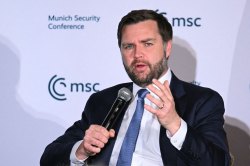
In a politically charged speech, Vice President JD Vance accuses European partners of stifling free speech. Vance’s broadside attack on allies undermines cohesion on Russia and signals unreliable U.S. leadership.
![]()
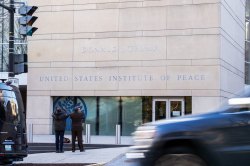
Trump issues executive order 14217 to dismantle the U.S. Institute of Peace (USIP)—a congressionally funded body with the mission to prevent wars by building peace—and he eventually renames the building after himself on December 4, 2025. By March 28, 2025, USIP staff—who are not federally funded employees—are laid off, and the USIP building is taken over by DOGE. The takeover, which a district court judge later declares unlawful and a “gross usurpation of power,” undermines the government’s ability to achieve a more peaceful and stable world, particularly as USIP often complements U.S. official peacemaking efforts.
President Trump issues executive order 14217 to abolish the Presidential Management Fellows program, a key pipeline for recruiting and training top, diverse, graduate talent for federal service. This move dismantles a decades-old program that has supplied national security and foreign policy agencies with skilled professionals, creating a leadership vacuum that will take years to fill. By severing this talent pipeline, the United States weakens its ability to maintain a world-class cadre of diplomatic professionals capable of responding to global crises and advancing American interests in the world, and it removes a critical opportunity for Americans of all backgrounds to enter into government service.
In what many have since described as the “Friday night massacre,” Trump and Secretary of Defense Hegseth abruptly fire the chairman of the Joint Chiefs of Staff, General C.Q. Brown; the chief of naval operations, Admiral Lisa Franchetti; the vice chief of staff of the U.S. Air Force, General James Slife; and the senior judge advocates general for the Army, Navy, and Air Force. Brown was the highest-ranking Black officer in the military and Franchetti was the highest-ranking woman in the Navy. Along with Slife, their firings represented a loss of more than 125 years of service in one fell swoop, demonstrating the Trump administration’s willingness to attack the most distinguished military leaders. This extraordinary move marks one of the first instances of the Trump administration’s efforts to undermine the military’s independence from political influence and erode its commitment to laws of armed conflict.
Watch the recording of a past CAP event about the politicization of the military.
![]()
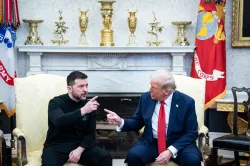
Trump’s ambush of Zelenskyy in the Oval Office damaged U.S. credibility with its important partner and delivered a propaganda victory to Moscow.
The administration halts battlefield intel to Kyiv to force talks. Though the administration later resumes intelligence sharing, the move blunts Ukraine’s defenses and signals wavering U.S. resolve to Moscow and to allies in Europe.
The State Department ends a long-standing practice in which U.S. embassies and consulates shared data on local air pollution levels. Many developing countries rely entirely on U.S. embassy monitoring data, so its removal leaves vulnerable populations without accurate information on dangerous air conditions and risks contributing to worsening air pollution globally—including in the United States.
![]()
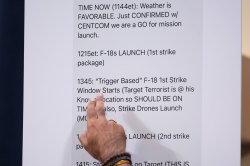
National Security Adviser Mike Waltz accidentally adds Jefferey Goldberg, editor-in-chief of The Atlantic, to a Signal group chat of high-ranking U.S. national security officials. The chat included classified details of military operations against the Houthis in Yemen. On March 24, 2025, Goldberg published the contents of the chat, sparking a political scandal dubbed “Signalgate.” The incident raises grave concerns about security protocol and accountability among U.S. national security leaders entrusted with safeguarding the nation.
![]()
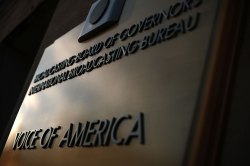
Trump signs an executive order to close Voice of America, Radio Free Europe/Radio Liberty, and Radio Free Asia, which leaves millions of people in authoritarian societies without access to independent reporting and information. A federal judge blocked the order, including efforts to lay off about 500 employees, but court cases are ongoing. Closing these outlets—which have together broadcast for more than 75 years—strengthens the ability of America’s adversaries to spread propaganda and malign influence worldwide, effectively ceding to them the information space.
The Trump administration strikes a secret deal with President Nayib Bukele to return violent gang leaders and informants back to El Salvador, disrupting ongoing criminal cases against the gang. In exchange, Bukele agrees to house deported Venezuelans in the brutal maximum security prison CECOT.
![]()
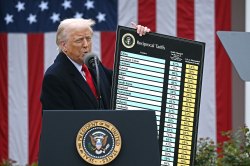
Trump’s across-the-board tariffs have raised consumer prices, hurt U.S. farmers, caused layoffs of U.S. workers due to disrupted supply chains, and triggered retaliatory trade deals among allies. Since April 2025, a total of 58,000 U.S. manufacturing jobs have been lost. Tariffs isolate the United States from the world and do not restore jobs for Americans.
At the prompting of far-right media figure Laura Loomer, the White House fired General Timothy Haugh, who led the National Security Agency and U.S. Cyber Command, along with his deputy, Wendy Noble. The White House also fired at least six additional senior NSC officials, including figures overseeing intelligence, international organizations, technology, and legislative affairs. The firings further politicize the intelligence community and NSC staff, pushing out officials who were deemed insufficiently loyal to Trump’s MAGA extremist base. This prioritization of loyalty over credentials weakens the institutions charged with keeping Americans safe and secure.
The Trump administration terminates USAID contracts with the World Food Program and dismantles agricultural development and nutrition programs across Africa, Asia, and the Middle East. Aid groups warn this is a “death sentence” for famine-stricken populations and a strategic gift to adversaries, diminishing decades of U.S. humanitarian leadership and fueling instability worldwide.
Defense Secretary Pete Hegseth announces the termination of the WPS program, which has enabled U.S. forces to build trust with local communities and gain critical insights into complex environments when they are deployed. The dismantlement of the WPS program removes an essential tool that has kept American service members safe while pursuing security objectives.
Cryptocurrency firm World Liberty Financial (WLF) announces that the Abu Dhabi-backed firm MGX would finance a $2 billion investment in the Binance crypto exchange. The deal is executed with USD1, a “stablecoin” issued by WLF, and the Trump family receives 75 percent of WLF’s profits. The deal thus serves as a massive cash injection for WLF, while President Trump is making deals with the Gulf nation, coming only months after a UAE official had invested $500 million in a Trump family venture. These deals raise concerns about whether the President is conducting foreign policy in ways that advance the national interest or his own financial interests.
The Trump administration submits its fiscal year 2026 budget request to Congress, with devastating cuts to foreign assistance spending. Despite promising to continue lifesaving programs such as the bipartisan President’s Emergency Plan for AIDS Relief (PEPFAR), the request slashes spending on global health and humanitarian assistance; it also repackages development assistance in an “America First” fund and significantly increases contributions to the Development Finance Corporation. The budget represents a significant retreat from U.S. presence around the world, at the same time as it seeks to increase spending on defense. This “America First” posture is a penny-wise and pound-foolish approach to national security, leaving a less stable world and increasing the risk of conflict, disease, and climate disasters.

In his first international trip, President Trump travels to the Gulf and visits Qatar, Saudi Arabia, and the United Arab Emirates—nations where he and his family have personal business relationships. Trump promises that the United States will no longer deliver “lectures” on democracy and rights and announces $142 billion in prospective arms sales to Saudi Arabia, despite concerns about Saudi’s destabilizing role in the region and potential Chinese access to the weapons systems. Just prior to this trip, the State Department had approved two major arms sales to the UAE, and the Commerce Department had announced it would do away with export controls on sensitive technologies, paving the way for the UAE to acquireadvanced computing chips despite national security concerns about China’s ability to access the technology. The visit raises serious concerns about the president’s conflicts of interest, particularly given the gifts of a Qatari airliner and Gulf crypto investments into Trump family ventures. These conflicts of interest weaken the United States’ ability to pursue foreign policy that is in the best interest of the American people.
Read more from CAP:
Director of National Intelligence Tulsi Gabbard fires acting National Intelligence Council Chairman Michael Collins and Vice Chair Maria Langan-Riekhof because of their analysis that the Venezuelan government had not directed the Tren de Aragua gang to “invade” the United States, an analysis that undermined the administration’s invocation of the Alien Enemies Act of 1798. The firings could further limit the intelligence community’s willingness to provide objective analysis. This would weaken the United States’ ability to accurately assess security threats and keep Americans safe.
![]()
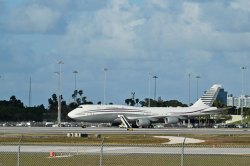
A week after the president’s return from Doha, the Trump administration officially accepts Qatar’s gift of a Boeing aircraft to be used as Air Force One. The secretary of the Air Force estimates the cost to outfit it for official use is “probably” less than the value of the jet, though some estimates place the cost much higher. The gift raises serious concerns about conflicts of interest and security concerns around espionage, surveillance, and compromise of U.S. national security protocols. By accepting the jet, Trump sends the signal that he is willing to accept gifts in exchange for favorable relations, placing his own interests above those of the country and the American people.
![]()
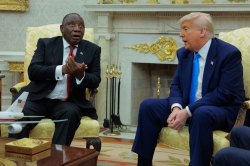
Trump hosts South African President Cyril Ramaphosa in a televised Oval Office meeting and confronts him with unverified “white genocide” claims. Ramaphosa emphasizes that acts of violence in South Africa are criminal activities, not political persecution. The spectacle strains relations with the United States’ largest trading partner in Africa and an emerging G20 leader, further ceding partnership opportunities on the continent to U.S. competitors.
Reports reveal the Trump administration is weighing a plan to withdraw 4,500 U.S. troops from South Korea—a move rooted in a transactional, “pay-to-play” approach to alliances. Pulling forces from the peninsula would shake America’s security commitments, fuel allies’ fears of U.S. abandonment, and weaken America’s ability to deter North Korea.
The Trump administration proposed a new policy to “aggressively revoke” the visas of Chinese graduate students in STEM fields. This “war on talent” drives away some of the world’s brightest minds away from the United States and hands its competitive edge to rivals such as China.
Secretary of State Marco Rubio announces plans to cut up to 80 percent of staff in the Bureau of Democracy, Human Rights, and Labor and freeze $400 million in grants for pro-democracy groups. By this time, the State Department has already fired around 60 contractors from the bureau who provided technical and area expertise to senior officials. Rubio’s plan is manifested in a July State Department reorganization where more than 1,300 staff are laid off. The announcement further undermines U.S. credibility and efforts to defend fundamental rights and freedoms abroad—tools that underpin America’s ability to counter authoritarianism and advance stability worldwide.
The Trump administration submits a $9.4 billion rescission package to Congress, seeking to claw back congressionally approved foreign aid and public broadcasting funds. Approximately $8.3 billion in cuts targets core foreign assistance accounts—including global health programs, development aid, humanitarian response, and contributions to multilateral institutions. While Congress later carves out some programs for protection, ultimately it approves a rescissions package that allows the president to cut around $7.9 billion in foreign assistance. These cuts eliminate programs that save lives, build goodwill for the United States abroad, and advance a more stable, predictable world.
The United States sends no official delegation to the U.N. Ocean Conference. By abandoning a seat at the table, the United States loses influence over global decisions on ocean health, fisheries, and coastal resilience—issues that directly affect American jobs, food security, and the protection of communities from rising seas and extreme weather.
The U.S. State Department announces that all student visa applicants must make their social media profiles public, which slows down visa processing without meaningfully enhancing security. According to Key Stone Group, about 57 percent of international students surveyed say these restrictions deter them from studying in the United States, while universities have experienced a 25 percent drop in enrollment since last year, undermining the United States’ role as a global leader in research and innovation. Chinese universities have already risen in rankings as American schools fall behind, coinciding with the Trump administration’s moves to slash federal research funding for more than 600 American universities and colleges.
Learn more.
Trump authorizes Operation Midnight Hammer, a series of B-2 bomber strikes on Iran’s nuclear facilities. While Trump claims the program was “obliterated,” experts and Israeli officials later admitted that Iran’s enriched uranium stockpile survived, and the strikes may have increased Iran’s political will to pursue nuclear weapons. The strikes also undermine diplomatic efforts, with Iran accusing the United States of betrayal and ruling out further negotiations on its nuclear program. U.N. inspectors are no longer allowed into Iran, depriving the international community of insight into Iran’s remaining nuclear facilities.
![]()

The Trump administration’s decision to eliminate USAID and slash foreign assistance programs—despite USAID accounting for only about 1 percent of the federal budget—creates a major shock to the global aid system. As of November 5, 2025, the elimination of USAID has resulted in 600,000 deaths, two-thirds of which are children. These cuts do not just cause humanitarian suffering; they strip away America’s power to advance U.S. interests abroad, from stabilizing fragile states to countering authoritarian influence. By gutting America’s ability to lead on development and disaster relief, the administration has weakened U.S. leverage, jeopardized the lives of vulnerable populations, and ceded ground for adversaries to fill the void and advance their own interests.
The Trump administration threatened key U.S. allies Japan and South Korea with punitive tariffs to extract economic concessions. This replaces mutual security cooperation with distrust, forcing Asian partners to question U.S. reliability and to hedge closer toward China.
The State Department fires senior analysts who warned that Russia was unlikely to end its aggression in Ukraine, challenging a more optimistic CIA assessment. Removing dissenting views from the intelligence community limits a more robust understanding of global threats, which leaves U.S. policymakers with a skewed picture that can impede their ability to most effectively protect national security.
![]()
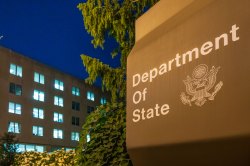
The Trump administration executes one of the largest personnel cuts in State Department history, laying off more than 1,300 staff as part of a reorganization that eliminated offices focused on human rights, refugee resettlement, and war crimes. This hollowing out of expertise cripples U.S. crisis response and values-based diplomacy. The mass layoffs or shuttering of offices—including at the Human Rights Bureau, Office of Conflict and Stabilization Operations, Climate Diplomacy Office, Counter Foreign Information Manipulation and Interference Hub, and Office of Global Women’s Issues—deprive the diplomatic corps of critical tools to advance global stability.
Trump announces a hard negotiation deadline and floats “secondary tariffs” on countries that buy Russian oil, then shifts messaging repeatedly, which muddies deterrence and invited tests of U.S. credibility. On September 2, 2025, the clock ran out on Trump’s deadline for Putin to end the war in Ukraine and no new penalties followed, confirming to allies and adversaries that U.S. red lines lack teeth.
Learn more.
The State Department announces the formal withdrawal of the United States from UNESCO. This decision erodes America’s influence on issues that shape the future: education, science, and cultural cooperation. By stepping back, the United States hands over leadership opportunities to others and risks becoming a spectator in arenas where it once set the standard.
In a memo to countries attending U.N. plastics treaty talks, the Trump administration urges opposition to binding limits on virgin plastic production and chemical restrictions and pressures smaller states to reject caps. Influenced by the fossil industry, Trump’s obstruction ultimately stalls the global treaty, undermining U.S. leadership and allowing petrochemical giants to continue to flood markets with plastics.
Secretary of Defense Hegseth overrules military leaders—including Chairman of the Joint Chiefs of Staff General Dan Caine—and refuses to promote to appoint General Douglas Sims to be director lieutenant of the Joint Chiefs. Reporting indicates that Hegseth has concerns that General Sims is not politically loyal enough to Trump, despite his years of exemplary service.
The Trump administration loosened critical export restrictions on trading advanced artificial intelligence and semiconductor technologies to China in pursuit of a trade deal. This decision dismantles a key U.S. leverage point and hands Beijing the very tools it needs to accelerate its military modernization—effectively sacrificing America’s long-term security for a short-term political win.
The United States formally rejects the International Maritime Organization’s “Net-Zero Framework” intended to reduce global emissions from the shipping sector. The Trump administration circulates memos warning that it would retaliate against countries that support the framework—a coercive tactic that impedes consensus on a sector that requires coordinated global rules to decarbonize. Months later, on October 17, 2025, the United States and other countries such as Saudi Arabia vigorously oppose the agreement—further postponing the adoption for a full year, undermining years of progress on reducing shipping emissions and sowing uncertainty for clean fuel investment.
![]()
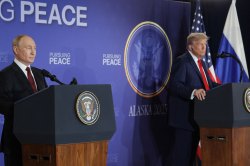
Trump hosts Putin on U.S. soil and leaves empty-handed while excluding Ukraine, which eased the Kremlin’s isolation without extracting concessions and sidelined an ally.
Gabbard announces the revocation of security clearances for 37 current and former national security officials involved in the 2016 assessment of Russian interference in the U.S. election, including a current senior CIA Russia expert. The firings risk creating a dampening effect on the intelligence community, potentially jeopardizing independent analysis. They also send a message to Russia or other nations that the United States will tolerate foreign efforts to interfere in U.S. elections and punish those who investigate them.
Director of National Intelligence Tulsi Gabbard announces plans to reduce the Foreign Malign Influence Center and fold it into another office. This move eliminates a congressionally mandated office to counter foreign election interference and influence campaigns from American adversaries.
The Trump administration sanctions four International Criminal Court (ICC) officials from France, Canada, Fiji, and Senegal over their efforts “to investigate, arrest, detain, or prosecute nationals of the United States or Israel.” (Three of the officials had been involved in the issuance of arrest warrants for Israeli Prime Minister Benjamin Netanyahu, Defense Minister Yoav Gallant, as well as senior Hamas leaders; one had been involved in investigating U.S. personnel in Afghanistan.) This move directly attacks the independence of the global justice system and could create a diplomatic rift with 120 countries who are members of the ICC, further isolating the United States from key allies who support the international court.
Hegseth fires Lt. Gen. Jeffrey Kruse as director of the Defense Intelligence Agency (DIA). Hegseth terminates Kruse after the DIA provided an objective battle damage assessment of the U.S. military’s strike on an Iranian nuclear facility—an assessment that contradicted White House claims. The firing is emblematic of a broader purge of senior Pentagon officials and undermines the intelligence community’s ability to provide objective analysis that is essential to protecting U.S. national security interests. This firing risks a chilling effect in the intelligence community that will likely make Americans less safe.
![]()
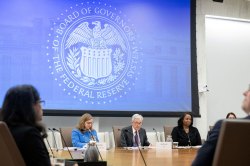
Trump’s push to oust Federal Reserve Governor Lisa Cook and pressure the Fed to slash rates triggered warnings from global financial leaders. Undermining the Fed’s independence risks destabilizing the dollar—the world’s reserve currency—by eroding confidence in U.S. monetary policy. The Bank of England’s governor called the threat “very serious,” cautioning that politicized rate decisions could make the United States look unreliable to global markets. This would also raise borrowing costs for Americans and accelerate moves toward alternatives such as the yuan or euro.
Following the failed Alaska summit, Russian strikes hit Ukrainian government and EU/British offices in Kyiv, which emboldens Moscow and makes U.S. warnings ring hollow.
Trump issues a pocket rescission to eliminate $4.9 billion in government funds for democracy, human rights, governance, and peacebuilding programs. The pocket rescission attempts to circumvent requirements for congressional approval by allowing funds to expire that had been earmarked for programs in election monitoring, civil society support, and health, as well as funding for pro-democracy organizations such as the National Endowment for Democracy. While the move is challenged in the courts, the rescission jeopardizes climate adaptation, democracy aid, and development assistance in vulnerable countries, eroding U.S. influence and leaving vulnerable communities more exposed to climate shocks, instability, and humanitarian crises.
The Trump administration imposed 50 percent tariffs on Brazilian goods in retaliation for Brazil’s prosecution of its former president for his attempted coup, accelerating Brazil’s expansion into Chinese markets. China bought 7.2 million tons of Brazilian soybeans in September, while U.S. soybean farmers lost sales. This not only cedes economic influence to China, but it also fuels Amazon deforestation as Brazil clears land for soy cultivation.
The Trump administration begins an unlawful military campaign of lethal strikes on boats in the Western Hemisphere. The administration claims that these strikes are against narcoterrorists without presenting any evidence or legal justification. These actions bypass Congress, violate international law, set a dangerous precedent for unchecked presidential power, and do not curb the flow of drugs.
The Trump administration ended U.S. participation in a joint effort with the European Union to combat foreign disinformation. This decision abandons a critical transatlantic tie, making both the United States and Europe more vulnerable to malign influence campaigns from China and Russia.
Learn more.
In a TV interview, Trump suggested U.S. courts should emulate China’s authoritarian judicial system. This open admiration for a system that lacks due process undermines the U.S. rule of law and weakens America’s credibility to criticize China for its human rights abuses.
Trump introduced a $100,000 fee for new H1B visas for skilled workers as part of his immigration crackdown. This harms key American high-tech industries that rely heavily on skilled workers from abroad.
![]()
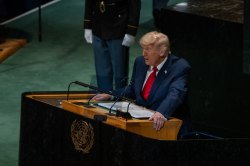
Trump gives a combative speech at the U.N. General Assembly’s 80th anniversary convening. Trump attacks the United Nations and tells other member states: “Your countries are going to hell.” In the speech, Trump also dismisses climate science, calling climate action a “con job” and attacking multilateral climate efforts. Such high-profile denials undercut the authority of science in diplomatic fora and damage U.S. credibility. The speech further demonstrates Trump’s abdication of global leadership, leaving adversaries to fill the void.
Trump and Hegseth require military leaders, including hundreds of admirals and generals serving in critical posts all around the world, to come to Quantico, Virginia. In the meeting, Hegseth and Trump push “anti-woke” policies. Hegseth also lectures the leaders on fitness standards, threatens to deploy the military in American cities, and advocates “maximum lethality” in the rules of engagement. These positions not only undermine military efforts to recruit and retain the best fighting force, but they also politicize the military and divert attention from pressing national security issues.
![]()
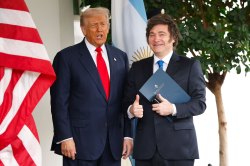
Trump funneled $20 billion in aid into Argentina without congressional approval to bail out Javier Milei, Argentina’s far-right leader, ahead of critical elections. Immediately following the bailout, Argentina began exporting soybeans to China, backfilling market share lost by American farmers because of the Trump administration’s trade war. Trump then suggested that the United States quadruple imports of Argentine beef, emphasizing the economic well-being of Argentine ranchers ahead of American farmers and ranchers, who called the proposal “a betrayal.”
After U.S. strikes killed Colombians in Caribbean waters, Trump slashed security aid to Colombia and sanctioned President Gustavo Petro. These moves jeopardize Colombia’s counter-narcotics operations and Black Hawk fleet maintenance, which fractures a decades-long counter-narcotics and security partnership and risks destabilizing a key U.S. ally in South America.
The Trump administration cuts more than $700 million in USAID, Department of Labor, and State Department programs that support labor rights abroad, including those that advance protections against forced labor and workplace violence. Tackling labor abuses abroad levels the playing field to protect American jobs, ensures fair competition, and makes trade work for both workers and businesses, which is why these programs have earned strong support from U.S. companies and bipartisan backing from Congress. Their removal weakens these safeguards for American businesses.
Rear Admiral Kurt Rothenhaus, a seasoned leader as chief of naval research, is replaced by a 33-year-old former DOGE employee and former McKinsey partner with no apparent naval experience. Replacing an experienced career military officer with an inexperienced appointee undermines the Navy’s ability to effectively oversee cutting-edge research, manage multibillion dollar investments in research and development, and maintain technological superiority over American adversaries.
President Trump orders the Pentagon to restart U.S. nuclear weapons tests for the first time in decades, shattering long-standing global agreements designed to prevent an arms race. This reckless move risks triggering a dangerous spiral of nuclear escalation and alarms allies who depend on U.S. leadership to keep the world safe.
![]()

The Trump administration sends no “high-level representatives” to attend the global climate summit, marking the first time in COP history that the United States abstains entirely from formal representation. This absence weakens American influence over global climate policy, ceding its diplomatic leadership and ability to shape key climate finance and emissions-reduction agreements to other countries.
At the APEC summit, Xi Jinping proposed a World Artificial Intelligence Cooperation Organization, positioning China as a leader in tech governance. The Trump administration was notably absent from the summit, leaving U.S. influence in new technologies behind and allowing China to set the rules on global trade.
Days after the Asia-Pacific Economic Cooperation summit, Trump struck a bilateral deal with Xi Jinping to ease his trade war, cutting tariffs and securing Chinese pledges to delay export controls on rare earth and agreeing to restart soybean purchases. Yet the deal did nothing to address China’s nonmarket practices, its abhorrent labor practices, or its predatory export policies.
![]()
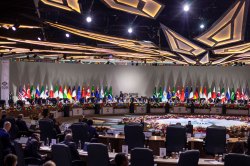
Trump orders a full boycott of the G20 in South Africa, citing
false allegations of genocide against white South Africans. Since the G20 is the world’s main forum for coordinating economic policy, shaping rules on trade, debt relief, and financial stability amongst the largest economies, the United States forfeits a seat at the table where decisions on global growth and crisis response are made. This gives adversaries a chance to rewrite the rules to their advantage while Americans are left behind.
Britain stops sharing certain intelligence with Washington over concerns that U.S. strikes on suspected drug smuggling boats in the Caribbean violate international law. The U.K. provides intelligence to support regional counterdrug operations. This move marks a rare public split between America and one of its closest allies, and diminished access to allied intelligence makes the American people less safe.
On the sidelines of the G7 in Ontario, Canada, Kaja Kallas, the European Union’s top diplomat, and Jean-Noël Barrot, France’s foreign minister, each stated that recent U.S. strikes in the Caribbean lacked any legal basis under international law. Their remarks highlight how the United States stands isolated within the international community, including among its closest allies.
Trump confirmed plans to sell America’s most advanced stealth fighter—the F‑35—to Saudi Arabia, calling it a win for U.S. ties. Saudi Arabia has deep defense partnerships with China, and its history of security leaks makes it a prime target for espionage. Even limited exposure to F‑35 technology—such as through stealth coatings or radar systems—could help China speed up its own fighter programs and erode America’s edge in the skies. By prioritizing short‑term deals over long‑term safeguards, Trump risks handing Beijing a boost for its defense strategy.
President Trump apparently rejects a CIA assessment that Crown Prince Salman was aware of and had approved the killing of journalist Jamal Khashoggi. The friendly meeting also undermines the efforts of the families of 9/11 victims to hold Saudi Arabia accountable for its involvement in the attacks, given ongoing lawsuits linking Saudi officials to the attacks. The meeting comes at a time when Saudi investors have invested in crypto and real estate ventures that benefit the Trump family, raising serious concerns about Trump’s conflicts of interests. Potentially placing Trump’s own personal interests over those seeking justice for 9/11 and Saudi’s acts of transnational repression, the visit weakens the United States’ ability to pursue justice and keep Americans safe.
A 28-point blueprint for ending the war in Ukraine leaked to the press, where it called on Ukraine to cede territory, limit its armed forces to roughly 600,000 personnel, renounce NATO membership in its constitution, and freeze its membership ambitions—all long-standing demands of Russia. Kyiv and its European partners reacted sharply, warning the document reads less like a U.S. peace offer and more like a Russian roadmap for Ukraine’s defeat.
Learn more.
After six members of Congress film a video that factually states that members of the armed forces and intelligence communities have an obligation to refuse illegal orders, Trump suggests they may be subject to imprisonment or death. Federal prosecutors attempted to indict the six lawmakers, but a grand jury blocked these efforts on February 10, 2026. This effort sends a chilling message to any service member forced to choose between following an illegal order or facing retribution.
Learn more.
The Trump Administration halts immigration applications for Afghan nationals and bars Afghans from entering the United States. The administration also pauses all asylum decisions for migrants and immigration applications from 19 countries on the travel ban list. Pausing asylum decisions without a plan leaves the U.S. government with mounting backlogs and more than 1.5 million migrants in limbo, including tens of thousands of Afghans—some of whom worked directly with the U.S. military during the war in Afghanistan. U.S. veterans say the Trump administration’s freeze leaves these Afghan partners exposed to Taliban retaliation and damages America’s ability to recruit local partners in future conflicts.
A 115-page internal report, authored by active-duty and former FBI agents, portrays the bureau under Patel’s leadership as a “rudderless ship” and “internally paralyzed by fear,” with agents hesitant to act without explicit orders. This dysfunction hampers the FBI’s ability to protect Americans from domestic and foreign threats.
After most members of the Pentagon press corps refused to agree to new rules that could punish journalists for reporting unauthorized information, the Trump administration restricted their access and replaced the press corps with pro-administration media outlets and conspiracy theorists. Press freedom advocates such as the National Press Club deemed this to be a direct assault on independent journalism, making it harder for the public to hold the Defense Department accountable.
Trump pardons former president of Honduras Juan Orlando Hernández, who was serving a 45-year prison sentence for drug trafficking charges—including accepting bribes to help traffic 400 tons of cocaine to the United States. According the U.S. Justice Department, Hernández “leveraged the Government of Honduras’ law enforcement, military, and financial resources to further his drug trafficking scheme.”
Defense Secretary Hegseth endangered U.S. operations by sharing precise strike times in a Signal group chat on an unapproved device, according to a Pentagon inspector general report. The leaked details—normally confined to secure channels—could have allowed Houthi militants to shoot down American aircrafts or fortify defenses, putting troops and national security at serious risk.
The Trump administration’s “National Security Strategy” marks a dramatic shift in U.S. global leadership. It rebukes Europe for what it calls a risk of “civilizational erasure” and notably softens criticism of adversaries such as China, Russia, Iran, and North Korea. This approach has alarmed American allies while drawing praise from the Kremlin, which said that the strategy aligns closely with Moscow’s view.
The Trump administration halted planned sanctions against a Chinese intelligence agency to preserve a trade truce. This decision prioritizes short-term economic concerns over national security, emboldening Beijing’s espionage operations and compromising efforts to counter Chinese intelligence theft within the United States.
![]()

The Trump administration authorized Nvidia to export its powerful H200 AI chips to China in exchange for a 25 percent tax on sales. This reversal of U.S. export controls hands Beijing the specific high-performance computing power needed to supercharge its military AI and surveillance state, effectively narrowing America’s national security and technological advantages.
U.S. Customs and Border Protection releases a policy proposal that requires tourists from 42 countries to share up to five years of social media history and disclose email accounts, as well as family history and biometrics, to enter the United States. The U.S. Travel Association warns this proposal could prevent millions of travelers from coming to the United States and result in billions of dollars lost for U.S. tourism, weakening America’s economic power and eroding cultural influence.
With little explanation, the Trump administration orders up to 30 career ambassadors to leave their posts and return to the United States, leaving embassies without leadership. The extraordinary move pulls hundreds of years of collective experience from the field and leaves vacancies in countries around the world, many in regions where China and Russia could expand their diplomatic activities.
Trump announces new class of battleship that is named after himself. Defense analysts criticize this announcement as an expensive waste of time and money as these proposed ships are ill-suited for America’s naval combat needs, will be vulnerable to attack, and are unlikely to ever be launched.
The Trump administration enacts visa bans on several anti-disinformation advocates and European officials who enforce the EU’s Digital Services Act, a law intended to promote accountability, content moderation, and transparency in the digital space. Secretary of State Marco Rubio says the law punishes “American viewpoints,” but these sanctions deepen a transatlantic rift and prevent U.S.-EU coordination to address shared digital-related transnational threats.
![]()
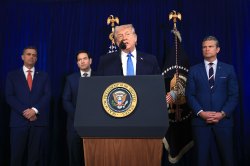
The Trump administration conducts a military operation to seize Venezuelan President Nicolás Maduro and his wife, flying them to New York to face federal charges. After the raid, President Trump says the United States will be “running” the country and taking control over its oil sector. Trump openly threatens further military action against Colombia, Cuba, Mexico, and Denmark. The raid follows months of military buildup in the region, with 15,000 troops now stationed in the Caribbean and Eastern Pacific—a costly operation that brings little benefit to the American people. Trump’s actions draw condemnation from partners and allies around the world and send a message to adversaries such as Putin and Xi that it is acceptable to take over countries in the pursuit of resources.
Learn more.
In a two-hour-long interview with
The New York Times, President Trump
refuses to rule out using military force to acquire Greenland, despite acknowledging the harm that it might cause to the NATO alliance. Just a day earlier, in response to Trump’s escalating threats, the prime minister of Denmark and six other European leaders had
insisted on Greenland’s right to self-determination. By threatening military action against an ally, Denmark, Trump risks jeopardizing the transatlantic alliance, making the United States more isolated and vulnerable in the world.
President Trump signs executive order 14199, directing all federal agencies to exit 66 international organizations, including the Global Counterterrorism Forum; the U.N. Framework Convention on Climate Change; the Intergovernmental Panel on Climate Change; the Intergovernmental Forum on Mining, Minerals, Metals, and Sustainable Development; and the U.N. Office of the Special Representative of the Secretary General for Children in Armed Conflict. As the United States continues ceding its role in global leadership, other countries, including adversaries, can set rules without U.S. input and coordination—eroding America’s leverage on security, climate, trade, and human rights.
Secretary of the Treasury Scott Bessent announces the United States is withdrawing from the GCF and stepping down from its seat on the GCF Board, ending American contributions to the multilateral fund that helps developing nations adapt to climate change and transition to clean energy. The withdrawal abandons U.S. leadership on climate finance at a critical moment, undermines global climate action, and weakens America’s ability to shape international climate policy.
Trump walks back on his tariff threats against NATO allies, through which he attempted to coerce various European countries to reach a deal on U.S. control over Greenland. He claims a vague “framework” deal with NATO’s secretary-general—a reversal many European leaders saw as unclear, unilateral, and poorly coordinated. Denmark and Greenland also publicly reaffirm Greenlandic and Danish sovereignty. By straining key alliances, Trump’s overt aggression leaves America more isolated and less able to advance its economic and security interests in the long term. Without these alliances, America will have fewer early warnings and a diminished ability to enact collective action when it matters most.
Learn more.
Trump announces the “Board of Peace” at the World Economic Forum—establishing it as an official international organization and charging a minimum $1 billion fee membership—while surrounding himself with a coterie of mostly authoritarian leaders. This move undermines U.S. credibility on the world stage, as analysts have called it a vanity project, money-making scheme, and an alternative decision-making forum to the U.N. Security Council that is unlikely to create sustainable peace. While the U.N. Security Council authorized the board specifically to oversee the ceasefire in Gaza, the board’s charter makes no mention of this purpose. The board distracts the urgent task of advancing a durable peace in Gaza and undermines—rather than bolstering—peacebuilding goals in conflict zones.
The Trump administration has reportedly pushed out leadership at the U.S. Commerce Department’s Office of Information and Communications Technology and Services, pressuring Executive Director Elizabeth Cannon, who was responsible for countering Chinese intelligence and cyber threats, to resign. This removal of expertise stalls critical Commerce Department rules that would regulate supply chains linked to Chinese drones and connected vehicles, leaving American infrastructure susceptible to disruption and potentially giving China the upper hand in defense technology.
Trump threatens to impose a 100 percent tariff on Canada if it pursues a China trade deal to reduce tariffs on electric vehicles and canola. Due to Trump’s aggression toward Canada—including continued threats to annex Canada as the 51st U.S. state—Canadian Prime Minister Mark Carney has sought to reduce cooperation with the United States and diversify its economic partnerships, including with the United States’ greatest trade competitor, China. These actions demonstrate considerable damage to U.S. relations with one of its closest allies and second largest trading partner.
An ICE agent attempts to enter the Ecuadorian Consulate in Minneapolis, prompting a formal protest from the Ecuadorian Ministry of Formal Affairs. In response, Germany issues a travel advisory warning German citizens about the risks of the chaotic immigration enforcement operation. The Trump administration’s immigration enforcement agenda continues to mar the image of the United States on the world stage, harming relations with close partners and allies.
In 2025, the Trump administration deployed federal troops to various U.S. cities, and the CBO estimates that continuing deployments at the current levels will cost $93 million per month. These actions normalize military involvement in domestic affairs, erode constitutional checks, undermine America’s democratic model, and signal to the world that U.S. governance can be bent toward strongman rule.
The Trump administration pauses several critical national security restrictions aimed at Chinese telecommunications and technology ahead of Trump’s planned meeting with Chinese President Xi Jinping, including bans on Chinese telecommunications companies’ U.S. operations and restrictions on routers and Chinese data center equipment. By prioritizing short-term measures over long-term security, the administration leaves U.S. data centers and digital infrastructure vulnerable to Chinese threats.
Secretary of State Marco Rubio offers Europe a conditional partnership, portraying the United States as “a child of Europe” while demanding that allies embrace Trump’s worldview—by rejecting global governance and what he calls a “climate cult.” Rubio echoes the administration’s core message that the West must align around Trump’s priorities rather than work as partners to address global challenges, signaling that U.S. partnership now comes with ideological strings attached.
Following the Supreme Court ruling that Trump illegally imposed sweeping country-specific tariffs with his “Liberation Day” announcement under the International Emergency Economic Powers Act, Trump immediately announces a tariff of 10 percent on all countries. Trump then declares on Truth Social that the administration would increase its global tariff to 15 percent. His contradictory announcements, shifting legal justifications, and rushed rollout triggers what EU officials call “pure tariff chaos”—prompting the EU to freeze a major trade deal with the United States and pushing other partners such as India, China, Switzerland, and the United Kingdom to reassess their economic commitments. This erratic response to the court’s rebuke deepens global distrust in U.S. trade reliability and sets a dangerous precedent of executive overreach—undermining the rule‑of‑law foundation that American economic power relies on.
FBI director Kash Patel fires at least a dozen counterintelligence agents and staff from the bureau’s elite CI-12 unit, including agents with deep expertise on Iran, just days before major U.S. military operations against Tehran—according to more than half a dozen sources with knowledge of the firings. These specialists had been central to tracking Iranian espionage, retaliation plots, and global threat networks, yet were dismissed because they had previously worked on the Mar-a-Lago classified documents investigation. The firings have gutted one of America’s most important domestic intelligence teams at the very moment Iran was expected to escalate reprisals, weakening the government’s ability to detect and disrupt foreign operations on U.S. soil.

After Anthropic refuses Pentagon demands for unrestricted use of its AI—citing its previously agreed upon contractual restrictions with the government that prohibit the use of its products for mass domestic surveillance and fully autonomous weapons—the Trump administration orders all federal agencies to stop using Anthropic products and designates the company as a “supply-chain risk.” This designation is normally reserved for foreign adversaries, and Anthropic has now challenged the designation in court. The administration’s retaliation sends a message to other private AI companies that it could carry out punitive measures against any who fail to agree to its terms. At a time when responsible uses of artificial intelligence are critical and beneficial to U.S. national security, this approach risks poisoning the relationship between the military and the high-tech sector.
Read more from CAP’s vice president for Technology Policy and from CAP Senior Fellow Frank Kendall.
View the past CAP event.
The United States and Israel begin “major combat operations” against Iran without any obvious urgent threat to justify the operations or congressional approval. Iran retaliates with strikes on American military bases and other infrastructure across the Middle East. As of March 2026, the war has led to the deaths of 13 U.S. service members, at least 200 wounded American troops, and more than 1,200 Iranian civilian deaths. This reckless “war of choice” quickly destabilizes the region, placing American civilians and service members, Iranian civilians, and regional partners in harm’s way. At a time when Russia continues its aggression in Ukraine and when China poses the most significant strategic challenge to U.S. power, this war also diverts resources and attention away from America’s most pressing national security threats.
View the CAP event on the military actions in Iran.
Learn more about the war and its costs.
A U.S. military strike hits the Shajereh Tayyebeh girls’ elementary school in southern Iran, killing around 175 civilians, a majority of whom were children. On March 11, 2026, a preliminary investigation determines the United States was responsible for the attack, as U.S. Central Command targeting was based on faulty intelligence from the Defense Intelligence Agency, which was relying on outdated location data for the school. This tragedy occurs after Secretary of Defense Pete Hegseth’s significant downsizing of Pentagon offices responsible for civilian harm mitigation, limiting internal capacity to probe and prevent these kinds of strikes in the future. The incident tarnishes the image of the United States as the world’s most competent and professional military, creating serious reputational damage.
View past CAP event.
The State Department urges all Americans in 14 countries in the Middle East to evacuate, telling them to leave via commercial transportation and without U.S. government vouchers. Thousands of Americans were stranded abroad and struggled to return home. By waiting until day three of the war to tell Americans to leave, the Trump administration demonstrates blatant disregard for Americans’ safety.
View past CAP event.
The Trump administration temporarily lifts sanctions on Russian oil shipments, allowing countries to purchase Russian crude already at sea in an effort to blunt soaring global energy prices triggered by the war in Iran. This action undermines years of global pressure on Russia and betrays America’s support for Ukraine while boosting Russia’s war machine—which reportedly provides intelligence and hardware to Iran to attack American service members.
Sorry, there are no results for the selected filters in any section.