Article

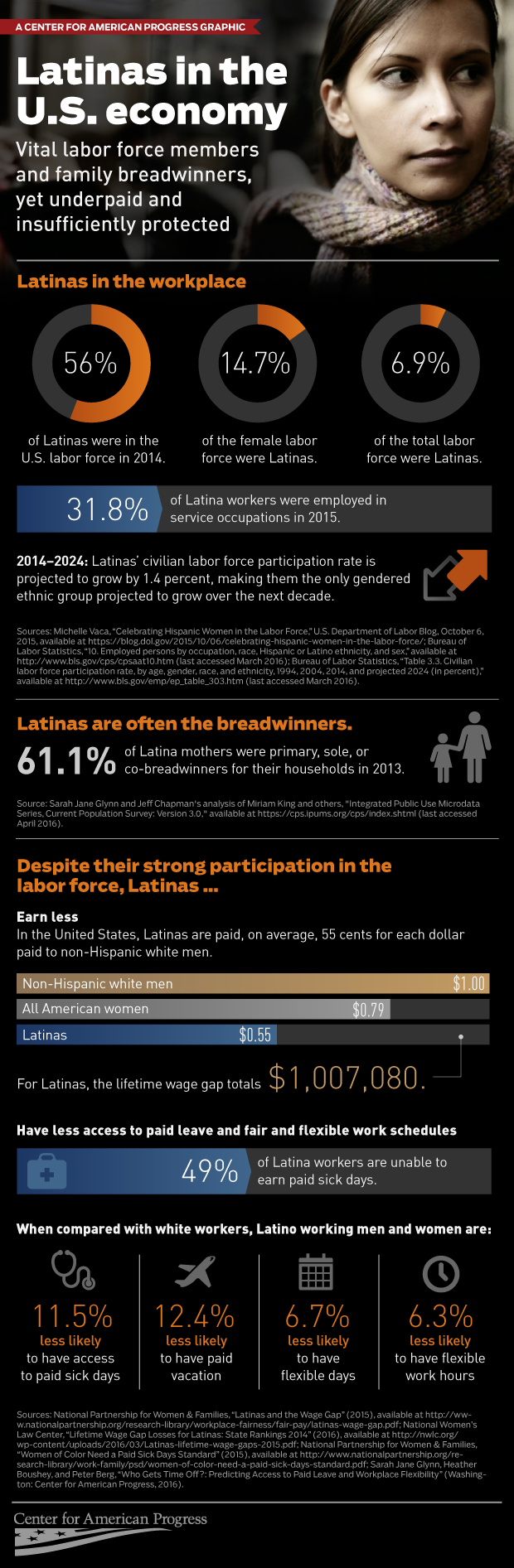
Infographic: Latinas in the U.S. Economy

Latinas are vital labor force members and family breadwinners, but they are also underpaid and insufficiently protected.

Regardless of their employer, parental status, or income level, the majority of workers will experience a work-life conflict at some point in their lives. Whether it is to be at home for an emergency household repair, pick up a sick child from school, or simply recover from their own illness, most workers need access to scheduling flexibility and paid leave. Despite the nearly universal need for such policies, Latino working men and women—as well as lower- and middle-income workers and workers with jobs in the service industry—are often unable to earn paid sick days, secure fair and flexible scheduling, or have access to any paid leave.
Latinas

Kaitlin Holmes is a Special Assistant for the Women’s Initiative at the Center for American Progress.

The positions of American Progress, and our policy experts, are independent, and the findings and conclusions presented are those of American Progress alone. American Progress would like to acknowledge the many generous supporters who make our work possible.

Authors

Kaitlin Holmes

Research Assistant

Teams

A subway train pulls into the Flushing Avenue station in Brooklyn.

Economic Policy

We are focused on building an inclusive economy by expanding worker power, investing in families, and advancing a social compact that encourages sustainable and equitable growth.

Racial Equity and Justice

We promote systemic reforms to dismantle structural racial injustices, give everyone an equal opportunity to thrive, and ensure society benefits from our nation’s diversity.