Introduction and summary
American citizens have a proud tradition of asserting their discontent through peaceful protest. From the Boston Tea Party1 to No Kings Day,2 protest is a foundational practice in U.S. history and one of the most patriotic things a citizen can do. It is so important, in fact, that the nation’s founders enshrined core tenets of free expression in the First Amendment of the Bill of Rights.3 The current divisive political climate has Americans coming out in droves to peacefully protest the harms of the Trump administration.4 However, those who voice disagreement with this administration are facing harsh threats to their constitutional freedoms of speech and assembly,5 and in some cases, to their very life and liberty.6 The killings of Renée Good7 and Alex Pretti8 at the hands of federal immigration officers have sparked rightful outrage9 at the aggression of government actors toward those protesting or merely observing their actions.10
The Trump administration has indicated that its full political will is dedicated to cracking down on dissent through aggressive politically directed prosecution and intimidation,11 echoing the political repression of the darkest moments in American history. In the past, the U.S. government has utilized powers of repression in times of war or intense fear.12 Abraham Lincoln commanded the shuttering of certain newspapers and the arrest of their editors during the Civil War,13 while antiwar protestors were arrested for antidraft speech during World War I.14 Such fearmongering not only led to the suppression of free speech and protest but was used to support horrific attacks against marginalized communities. For example, racism and wartime paranoia wrongly convinced the U.S. government that Japanese Americans were colluding with the nation of Japan during World War II, and it forcibly held more than 120,000 people of Japanese descent—two-thirds of whom were American citizens—in internment camps for supposed national security concerns that were never based on evidence.15 These fear-based justifications for violent suppressions of civil liberties have echoes in the actions of the U.S. government today.
The Trump administration has indicated that its full political will is dedicated to cracking down on dissent through aggressive politically directed prosecution and intimidation, echoing the political repression of the darkest moments in American history.
Americans from every part of society can confront a government that runs roughshod over the rule of law and their liberties—citizens by making their voices heard through protest and voting, judges by continuing to protect protest and speech instead of bowing to the wants of a despotic executive, and members of the military and federal officers by following the Uniform Code of Military Justice, which mandates disobeying illegal orders,16 especially those that are unconstitutional. Moreover, members of Congress from both sides of the aisle must remember their oath to the Constitution17 and use every tool at their disposal to rein in the executive branch’s abuses of civil liberties.
![]()
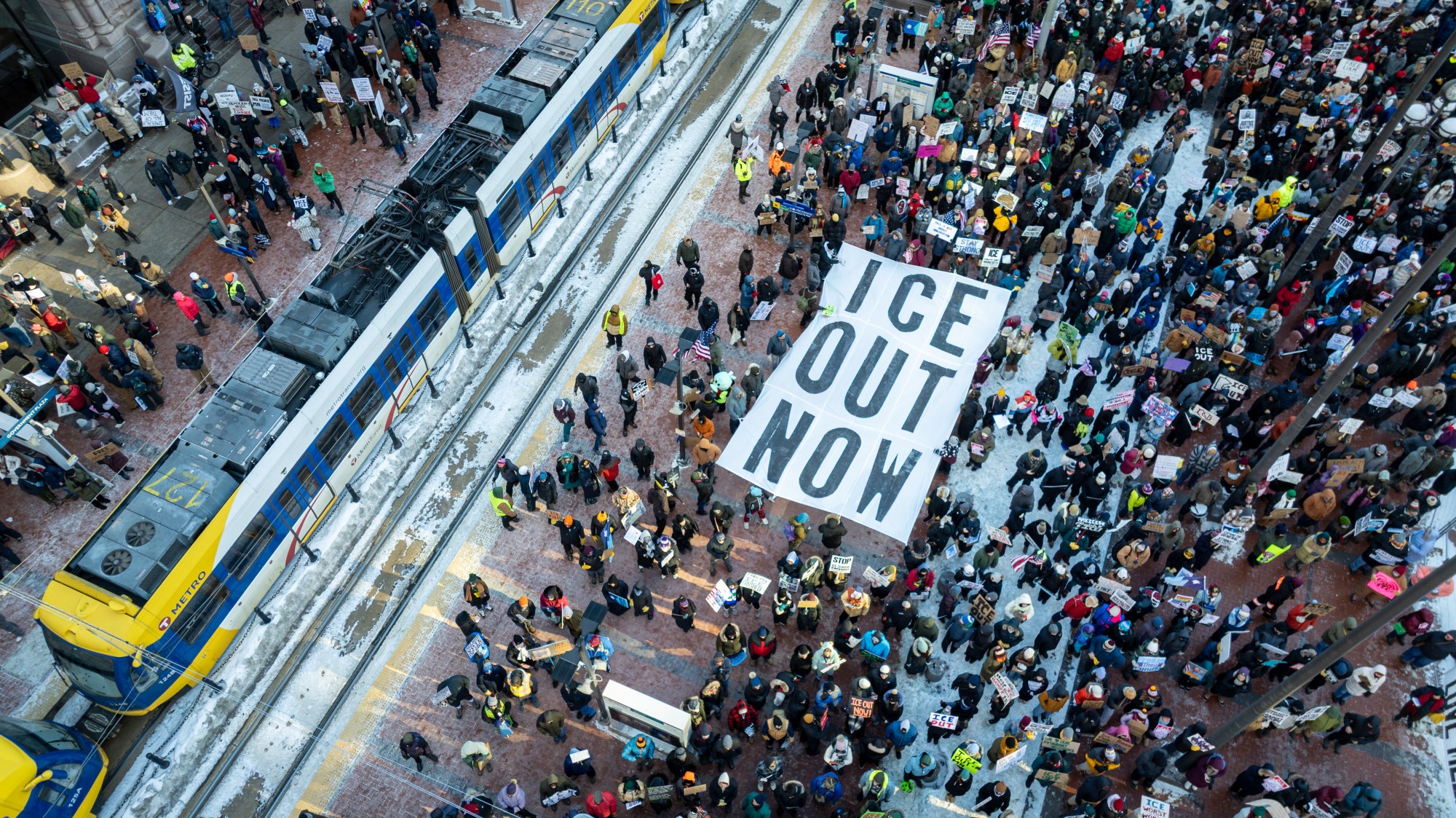 Demonstrators gather to march calling for an end to ICE operations in Minnesota on January 30, 2026 in Minneapolis, Minnesota. (Getty/John Moore)
![]()
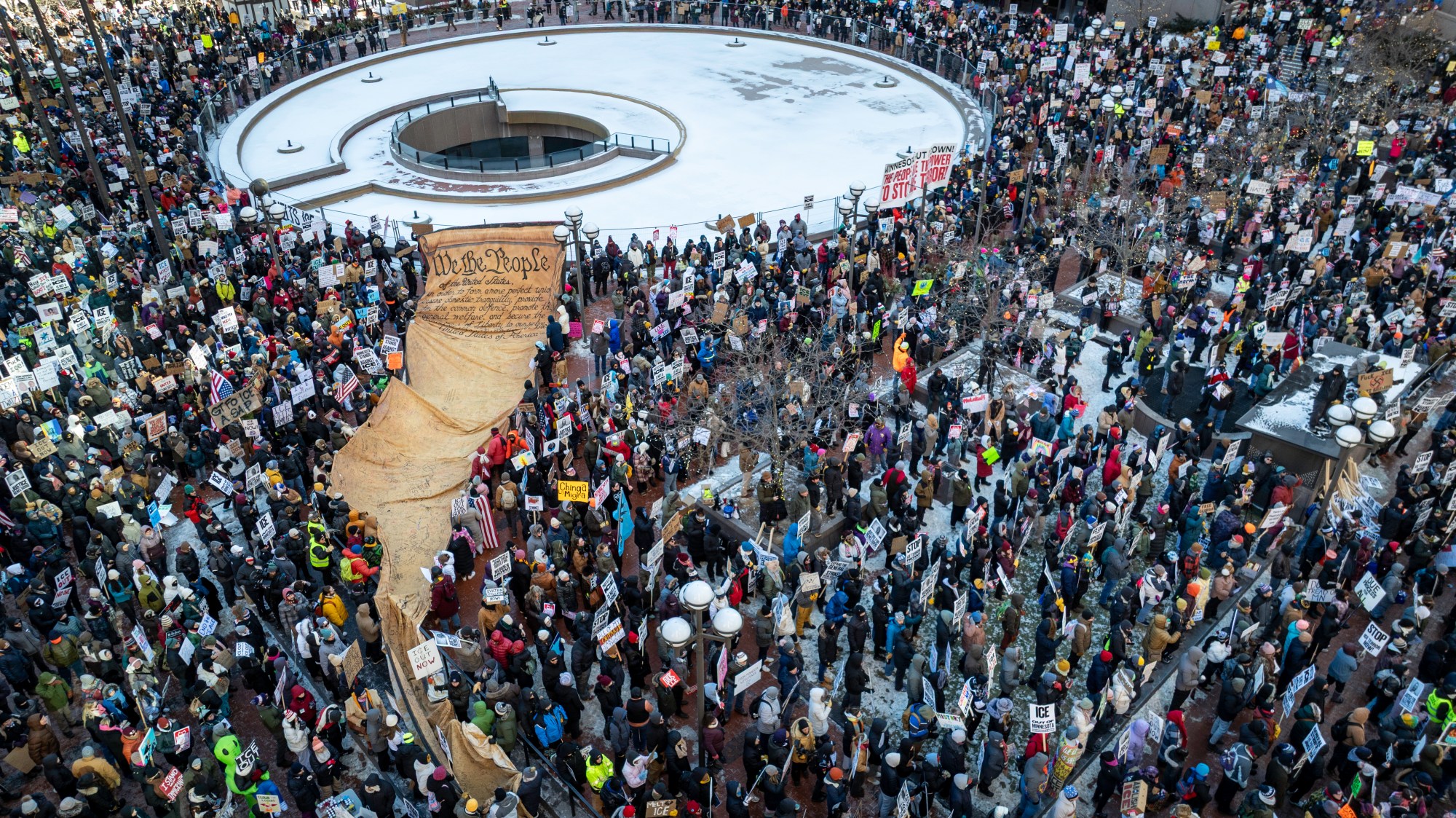 Demonstrators gather to march calling for an end to ICE operations in Minnesota on January 30, 2026 in Minneapolis, Minnesota. (Getty/John Moore)
War and fear weaponized
A single sentence in the Bill of Rights—the First Amendment—protects every American from being silenced by their government. It reads:
Congress shall make no law respecting an establishment of religion, or prohibiting the free exercise thereof; or abridging the freedom of speech, or of the press; or the right of the people peaceably to assemble, and to petition the Government for a redress of grievances.18
These protections have allowed countless citizens to peacefully express their opinion, no matter how controversial the content.19 As this section highlights, American governments have attempted to stifle these distinct but interconnected freedoms for almost as long as they have existed.
See also:
The First Amendment protects a range of activities, but most important among them is Americans’ right to be critical of their government without fear of reprisal. This freedom allows journalists to conduct the crucial reporting that brings to light news the American public needs to know.20 Free speech protections even shield views that most Americans would find offensive, such as much of the hateful rhetoric of the Ku Klux Klan.21 In a statement explaining its legal defense of the Traditionalist American Knights of the Ku Klux Klan in 2012, the executive director of the American Civil Liberties Union (ACLU) of Eastern Missouri stated, “If we don’t protect the free speech rights of all, we risk having the government arbitrarily decide what is, or is not, acceptable speech.”22 A selective application of civil liberties such as the freedom of speech would endanger the promise of freedom the Constitution makes to every American.
Wartime “necessity”
Yet throughout U.S. history, wartime has been used as an excuse to allow for the dampening of civil liberties. Criticism of the government often has been considered seditious in such moments, but such an outlook is antithetical to the founding principles of the nation.
In 1798, President John Adams signed the Alien and Sedition Acts into law as so-called “war measures” to support the nascent country in an undeclared conflict with France known as the Quasi War.23 The acts consisted of four separate laws: three regarding citizenship and the treatment of foreign residents and the Sedition Act.24 The Sedition Act banned “false, scandalous and malicious writing or writings against” the U.S. government, the president, or Congress.25 Ten people were convicted under the act, including newspaper editors associated with the minority party, the Democratic-Republicans.26 One Democratic-Republican congressman was arrested and convicted for his public writings against President Adams, in which he claimed that Adams was seizing power.27 Ironically, his arrest proved this very point. Another man was imprisoned under the act for drunkenly musing that he did not mind if Adams were shot in the rear by a cannon.28 Both purposeful statements and off-handed comments were policed by a government founded on the principle of free speech and political dissent just a few years prior. The Sedition Act of 1798 expired in 1801, and the nation was better for it.29 John Adams himself was seemingly reluctant to sign the law.30 In fact, he was quoted as saying, “I regret not the repeal of the Alien or Sedition Law, which were never favorites with me.”31 The Sedition Act has been criticized by contemporaries and historians alike as an egregious attack on the core principles of the nation.32 Thomas Jefferson wrote:
For my own part, I consider these laws an experiment on the American mind to see how far it will bear an avowed violation of the constitution. If this goes down, we shall immediately see attempted another act of Congress declaring that the President shall continue in Office during life, reserving to another occasion the transfer of the succession to his heirs, and the establishment of the Senate for life.33
Jefferson’s description perfectly captures the slippery slope of restricting free speech. This was precisely the sort of illiberalism and denial of democratic freedoms over which Americans had just fought a war.34 However, the Sedition Act’s suppression of free speech was posed as a necessary evil to fight off a supposedly existential threat to the nation.35 Such rhetoric would be echoed for centuries to come, with similarly restrictive measures enacted during the Civil War, World War I, and World War II on the basis of wartime necessity.36 During the Civil War, President Abraham Lincoln censored the free press by commanding the arrest and closure of certain newspapers37 for publishing false statements regarding the war and suspended the writ of habeas corpus,38 which allows detainees to challenge their imprisonment in court. Shortly after the United States entered World War I, Congress passed the overly broad Espionage Act of 1917, which criminalized conveying information to interfere with the war effort39 and allowed the Postmaster General to block the mailing of material that critiqued U.S. involvement in the war.40 Antiwar activists were arrested under the Espionage Act for merely distributing leaflets that opposed the draft.41 The Sedition Act of 1918 amended the Espionage Act, strengthening this government authority to curb any political speech seen as criticizing the draft, the war effort, the government, or the flag.42 The act was repealed in 1921 after the war ended.43
Even in times of peace, the United States has suppressed the civil liberties of its citizens.
Peacetime fears
Even in times of peace the United States has suppressed the civil liberties of its citizens. Throughout the 20th century, government fearmongers weaponized legal systems to suppress or enact state violence against supposedly subversive political groups.
Legislatively, the Smith and McCarran Acts were used to criminalize ideology and neutralize suspected communists, creating a chilling effect on free speech.44 Officials used injunctions and permit denials, as well as violent law enforcement tactics, to block civil rights marches.45 Simultaneously, the FBI utilized illegal warrantless surveillance and infiltration to disrupt civil rights and antiwar groups,46 actions that eventually led to the establishment of much-needed congressional oversight.47 This selective application of laws, disproportionate use of force, and shameful abuse of government power against the very citizens who empowered the government is an evident assault on constitutional freedoms.
The House Un-American Activities Committee (HUAC) publicly shamed political subversives.48 Originally focused on fascist sympathizers in the 1930s, the committee soon shifted focus to rooting out communism.49 HUAC hearings in the 1940s and 1950s led to the blacklisting and social exile of the unlucky individuals subject to these hearings.50 The Alien Registration Act of 1940, also known as the Smith Act, was another expansive antisedition law created in response to the possibility of another war in Europe and the rise of communism.51 Similarly, the Internal Security Act of 1950, known as the McCarran Act,52 was written with the purpose of suppressing communist action that was supposedly a danger to the U.S. government. President Harry Truman vetoed this bill, stating it was “a long step toward totalitarianism,” but Congress overrode his veto and the McCarran Act became law.53 These laws did not solely criminalize violent action or conspiracy, but advocated a certain ideology and had an immense chilling effect on political speech and assembly.54 Under the McCarran Act, communist organizations were forced to register with the government, and the president was allowed to detain individuals suspected of espionage or sabotage during a national emergency.55 This fear of communism swelled in the 1950s, when Sen. Joseph McCarthy (R-WI) and FBI Director J. Edgar Hoover spearheaded the naming and blacklisting of suspected communists and the stoking of public fear.56 This era—defined by government-sponsored witch hunts of speech and association—sullied the constitutional promise of free expression.
Eventually, both provisions of the McCarran Act were repealed. In 1965, the U.S. Supreme Court ruled in Albertson v. Subversive Activities Control Board that such registration of an individual violated the Fifth Amendment’s self-incrimination protections.57 In 1971, Congress repealed the detainment provision, known as the Emergency Detention Act, and codified the following protection as the Non-Detention Act:58 “No citizen shall be imprisoned or otherwise detained by the United States except pursuant to an Act of Congress.”59
When signing the bill that repealed the detainment provision, President Richard Nixon admitted that Americans were concerned that it could be used to imprison people for having unpopular views.60 Such a worry surely had a chilling effect, especially in the context of the political repression that was characteristic of the decades prior. Though Nixon emphasized that the provision was never invoked and such fears may be unwarranted, he said that “there is no place in American life for the kind of anxiety … which the Emergency Detention Act has evidently engendered.”61 Even the suggestion of suppression is a dangerous thing.
Beyond the public campaign against left-wing groups, there was a covert element of state suppression of political dissidence. For 15 years, the FBI, helmed by J. Edgar Hoover, ran a series of surveillance and infiltration operations through the Counter Intelligence Program (COINTELPRO)62 into political groups it aimed to “expose, disrupt, misdirect, discredit, or otherwise neutralize.”63 Undercover federal agents infiltrated civil rights, socialist, and antiwar groups,64 wiretapping their phones without warrants, blackmailing leaders, and stirring internal discontent.65 In March 1971, activists broke into an FBI field office and later released the files they found.66 All in all, “COINTELPRO was responsible for at least 204 burglaries by FBI agents, the use of 1,300 informants, the theft of 12,600 documents, 20,000 illegal wiretap days and 12,000 bug days.”67 The American government waged a full-fledged, illegal reconnaissance operation against its own citizens. COINTELPRO outraged the country, and the program was eventually discontinued.68
Around that same time, President Nixon was plagued by another, more personal scandal related to his abuse of surveillance.69 His administration compiled lists of political enemies and used government surveillance resources to track them. Nixon and top government aides wiretapped both his own staff and his political rivals, and they explicitly strategized how they could “use the available federal machinery to screw our political enemies,” of which they had a running list.70 Though this famously culminated in the Watergate scandal,71 the aforementioned abuses leading up to the Watergate Hotel break-in were themselves an abuse of executive power.
The Senate Select Committee to Study Governmental Operations with Respect to Intelligence Activities, more famously known as the Church Committee, was formed in response to these scandals. It found that excessive, unaccountable intelligence operations had been occurring domestically and abroad since President Franklin D. Roosevelt’s administration.72 Following the Church Committee, in 1976, the Senate established the Senate Select Committee on Intelligence, to provide “vigilant legislative oversight over the intelligence activities of the United States to assure that such activities are in conformity with the Constitution and laws of the United States.”73 Then, in 1978, the Foreign Intelligence Surveillance Act (FISA) was signed into law, requiring the executive branch to seek approval from a newly formed Foreign Intelligence Surveillance Court (FISC) to conduct surveillance on American citizens.74 Even this legislative fix is imperfect, as the FISC lacks transparency,75 and successive administrations have expanded surveillance authorities. Congress amended FISA through the 2001 USA PATRIOT Act in response to the War on Terror and made these protections less robust, allowing for surveillance with a wider scope and less oversight.76
This era was also defined by explicit, often violent suppression of protest. During the Civil Rights Movement, police officers often used excessive force against activists, attacking them with water hoses, dogs, and batons.77 Such visceral images shocked the nation and pivotally struck the conscience of many.78
![]()
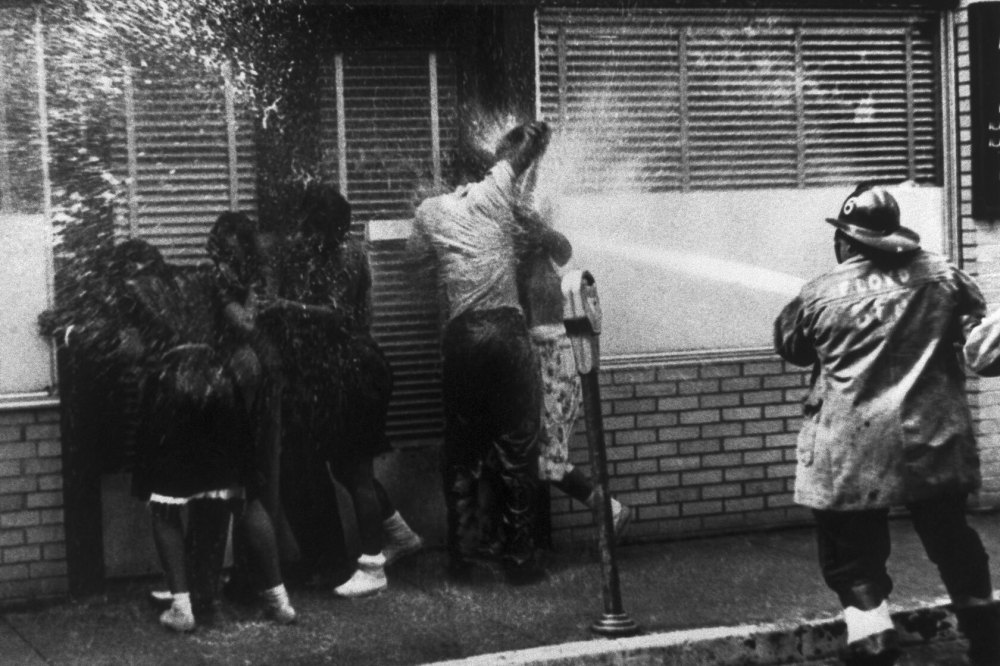 Firemen bear in on a group of African Americans who sought shelter in a doorway as hoses and dogs were used in routing antisegregation demonstrators in Birmingham, Alabama, on May 3, 1963. (Getty)
Local government officials weaponized local law by denying permits to prevent assembly.79 State and local officials frequently sought injunctions to block marches and protests.80 Due to their wide discretion, prosecutors often charged peaceful protestors with vague or broadly applied statutes such as breach of peace laws,81 which criminalize speech that is disorderly or disturbs the peace. The Rev. Dr. Martin Luther King Jr. was arrested in 1963 for disobeying a protest injunction.82 While in jail, he wrote his famous essay, “Letter from a Birmingham Jail,” which advocated for the civil rights movement:83
Sometimes a law is just on its face and unjust in its application. For instance, I have been arrested on a charge of parading without a permit. Now, there is nothing wrong in having an ordinance which requires a permit for a parade. But such an ordinance becomes unjust when it is used to maintain segregation and to deny citizens the First-Amendment privilege of peaceful assembly and protest.84
Selective application of laws intended to subdue nonviolent political dissent is an assault on constitutional freedoms. It is the weaponization of the rule of law.
Selective application of laws intended to subdue nonviolent political dissent is an assault on constitutional freedoms. It is the weaponization of the rule of law.
![]()
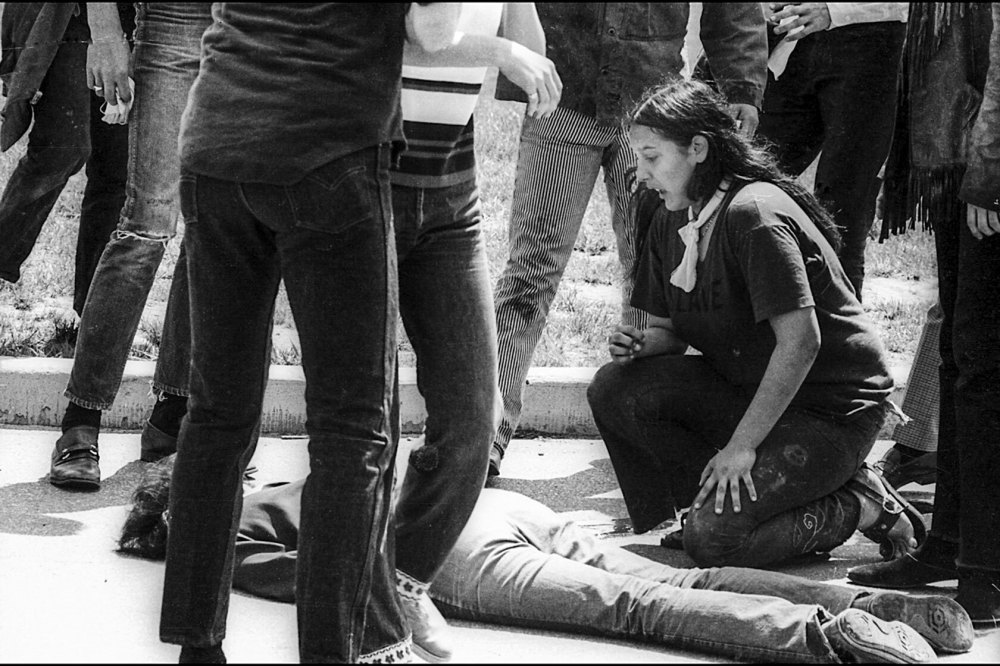 Mary Ann Vecchio kneels over the body of Kent State University student Jeffrey Miller, who had been shot during an antiwar demonstration on the university campus in Kent, Ohio, on May 4, 1970. (Getty/Howard Ruffner)
In 1970, students at Kent State University erupted into protest against the expansion of the Vietnam War.85 The governor deployed the Ohio National Guard to campus for a few days to quell the protests.86 On May 4, 28 members of the guard fired rounds into a disorderly crowd of demonstrators.87 This barrage of violence killed four students—three protestors and one woman walking to class—and wounded nine others.88 The shock of the Kent State massacre reverberated across the country.89 Students at hundreds of campuses across the country went on strike.90 Though the guardsmen attested that they acted in self-defense and were not found legally responsible,91 other witnesses and analysts claimed that the guardsmen’s response was unwarranted.92 The commission that President Nixon created in response to the massacre and the subsequent strike found that while “[t]he actions of some students were violent and criminal and those of some others were dangerous, reckless, and irresponsible … [t]he indiscriminate firing of rifles into a crowd of students and the deaths that followed were unnecessary, unwarranted, and inexcusable.”93 The disproportionate response of the Ohio National Guard against student protestors was an immense tragedy—but it also indicated a shift toward heightened polarization in American culture and a broader awareness of state violence.94
The legal case for protest
The Supreme Court notably began shaping the boundaries of the First Amendment through cases in the 20th century. Such as in other areas of jurisprudence, each era of the court has approached free expression cases differently—some being more restrictive than others.95 When a court reviews a free expression case where speech is restricted based on the content of the message, the judge employs a form of review known as strict scrutiny.96 When strict scrutiny is applied, the action is assumed to be unconstitutional, and the onus is on the government to prove otherwise.97 This is historically recognized as a high bar for the government to clear—a vast majority of actions reviewed under strict scrutiny are struck down.98 Content-neutral restrictions on speech—such as time, place, and manner restrictions—are held to a slightly lower standard known as intermediate scrutiny.99 Government actions can pass an intermediate scrutiny review if they are found to further an “important government interest” instead of the more rigorous “compelling state interest” required under strict scrutiny.100 While restrictions under both reviews must be narrowly tailored, under strict scrutiny, the law must be the least-restrictive option, whereas that is not the case under intermediate scrutiny.101
![]()
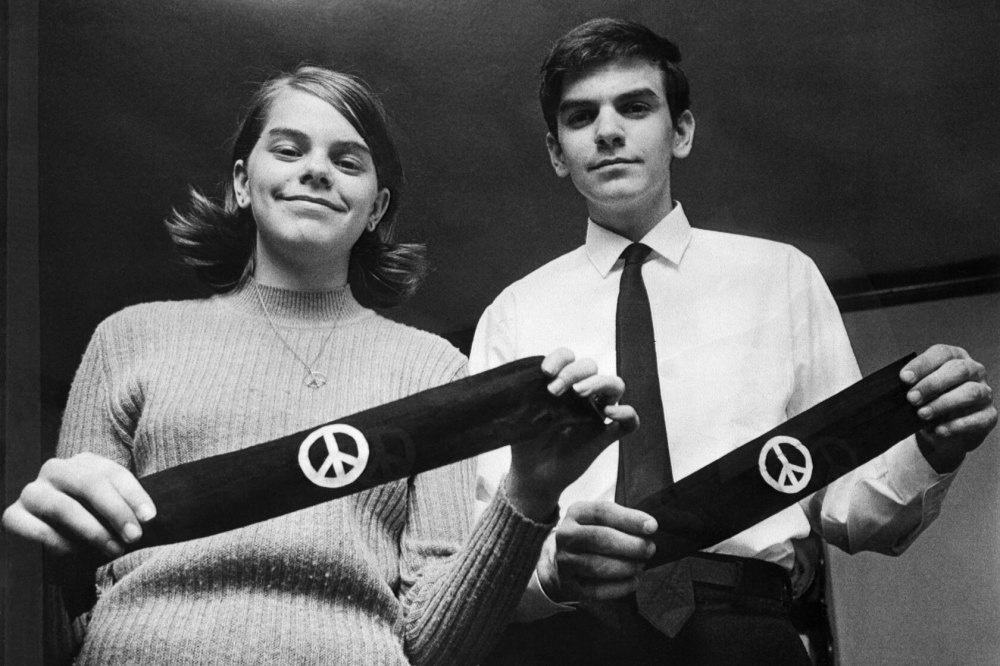 Mary Beth Tinker and her brother, John, display two black armbands, the objects of the U.S. Supreme Court's agreement March 4 to hear arguments on how far public schools may go in limiting the wearing of political symbols. (Getty)
The current American landscape
The second Trump administration has demonstrated a clear hostility toward Americans exercising their right to dissent.102 Though President Trump was by no means welcoming to dissent during his first term,103 his second term is exceedingly more repressive, mirroring authoritarian regimes in other nations.104 It has targeted political opponents with investigations and attempted indictments,105 deployed the military and federal agents in American cities,106 fanned tensions between communities,107 encouraged state violence against protestors, and even incidentally hurt bystanders.108
Violence against protestors
Americans all across the country have been protesting the current Trump administration, outpacing protests of the first term.109 There has been a particular focus on the inhumane immigration enforcement strategies that Immigration and Customs Enforcement (ICE) has been employing.110 Though protests were widely peaceful, tensions flared in June 2025 in Los Angeles as ICE officers came face-to-face with civilian protesters and bystanders.111 Local authorities were handling the issue, but President Trump deployed federalized National Guard troops and active-duty Marines, against Gov. Gavin Newsom’s (D-CA) objections.112 Trump also deployed the National Guard to Washington D.C., Portland, Memphis, and Chicago.113 In addition to various lower-court decisions that have blocked many of those deployments,114 the Supreme Court recently ruled that the president was not allowed to federalize and deploy the National Guard in Illinois.115 Subsequently, the Trump administration announced that it would cease National Guard deployments in Chicago, Los Angeles, and Portland.116
Minneapolis
DHS operations in Minneapolis in December 2025 led to tense interactions between federal agents and protestors, including one in which an ICE officer knelt on a protester’s back.117 The administration then announced that it would send 2,000 immigration officers to the city in what ICE Acting Director Todd Lyons called the “largest immigration operation ever.”118 This operation was supposedly a response to an alleged local fraud scandal119—though that seems like an excuse for an aggressive expansion of immigration enforcement.120 The surge in immigration enforcement galvanized the community. Concerns over the negative impact DHS activity near schools could have on children and their families121 led neighbors to carefully observe school drop-offs.122 Then on the day after the DHS announcement, after dropping off her 6-year-old at school,123 Renée Good’s vehicle was surrounded by federal agents, who ordered her to exit.124 Good began to drive away, and one officer shot into her car, striking her three times.125 DHS agents refused to allow a physician bystander to help, and Good did not receive CPR in the 10 minutes after she was injured before emergency medical services arrived.126 Although Good eventually received medical attention, she died a half hour later.127
Just a few weeks later, on January 24, Alex Pretti—an ICU nurse at the local veterans’ hospital—was killed while shielding a fellow protestor.128 Pretti was initially filming the interactions of immigration officers in the area and directing traffic,129 but when another protestor was shoved by DHS officers, he put himself between the woman and the officers, protecting her, while keeping his arms raised, likely to show he was not a threat.130 Nonetheless, the immigration agents then pepper sprayed Pretti, tackled him, and pinned him to the ground.131 They took his legally owned and concealed firearm from his waist band, disarming him, and fired multiple shots into him.132 Alex Pretti was pronounced dead at the scene.133
The Insurrection Act: A last resort
Trump once again threatened to invoke the Insurrection Act, this time in Minneapolis.134 The Insurrection Act is a series of laws that empower the president to deploy federal troops domestically to stop an insurrection or a state’s unconstitutional behavior.135 It has only been invoked 30 times.136 Reportedly, 1,500 active-duty soldiers were told to stand by for deployment in the city but were later told to stand down.137 Such a domestic deployment of troops should only be invoked as a last resort, when a state government is the perpetrator of or does not have the capacity intervene against “insurrection, domestic violence, unlawful combination, or conspiracy” that deprives people of their constitutional rights or “obstructs the execution of the laws of the United States.”138 Heavily armed troops in the streets will likely exacerbate rather than quell violence. When Marines were deployed in Los Angeles during the 1992 Los Angeles riots in the wake of the killing of Rodney King, these combat-trained troops did not have the same rules regarding the use of force as civilian law enforcement, leading to near-fatal consequences for civilians.139 In one case, when a police officer asked for “cover,” he meant for the officers and Marines around him to ready their weapons, but the Marines did as they were trained and “covered” with firepower, firing more than 200 bullets into a house where children were present.140 Remarkably, no one was killed. Combat troops are not meant to police civilians. Even the domestic deployment of the National Guard, which has experience working domestically,141 must be handled carefully. National guardsmen have clear requirements, dictated by statute, for how they can engage with civilians.142 Any deployment of the National Guard as a manner of civilian law enforcement, such as the proposed quick reaction forces for crowd control as outlined by a Pentagon memo,143 must be heavily scrutinized. These reaction forces are discussed further in the section of this report that tackles possible areas of concern regarding the freedom of protest.
In their continued violence in Minneapolis, DHS agents have failed a core tenet of the department’s mission: to “safeguard the American people.”144 And these actions are symptomatic of what is happening across the nation to citizens and noncitizens alike. The U.S. government is not only ruthlessly attacking and killing civilians, but it is also blaming them for their own deaths. Former U.S. Secretary of Homeland Security Kristi Noem claimed that Renée Good was going to hit ICE agents with her car so was shot in self-defense, and that Good was engaging in “act of domestic terrorism.”145 Vice President JD Vance quickly argued that Good was to blame for her own death.146 However, multiple independent analyses note that Renée Good was turning her car away from the agents when she was shot.147 Similarly, Noem initially claimed that Alex Pretti was “brandishing” a weapon with intent to harm law enforcement officers when he was killed.148 Senior U.S. Customs and Border Patrol official Greg Bovino said that Pretti “wanted to do maximum damage and massacre law enforcement.”149 Yet video evidence filmed by citizen observers proves that is not the case: Alex Pretti was not reaching for his weapon and instead had his hands up and was acting as a human shield for his fellow Minnesotan against state violence.150 If everyone who protests is a terrorist, then that can be used as a pretext for their disenfranchisement, arrest, or death. This administration wants Americans to believe its propaganda over what they can see with their own eyes.
Minneapolis residents, Minnesotans, and Americans all over the country came out to remember Alex Pretti and Renée Good and protest ICE in their cities.151 Tensions flared in the Twin Cities especially,152 where federal agents used tear gas and other less-lethal but still dangerous munitions against protesters.153 These unsafe tactics were used so recklessly that even uninvolved bystanders were caught in the crossfire.154 A family of eight, including an infant, were tear gassed in their car coming back from a youth basketball game.155 As a result, the infant experienced breathing difficulties and was hospitalized in serious condition.156 This horrific incident highlights how aggressive tactics can harm the targets of such violence (warranted or otherwise) and bystanders alike. Though the operation in Minneapolis was formally ended on February 12, 2026,157 locals in the suburbs of Minneapolis are pointing out that aggressive DHS enforcement is still occurring.158 However, the protests of Minnesotans and all those who stood in solidarity with them is an incredible example of collective action.
As the video evidence mentioned above shows, claims of self-defense from the Trump administration are implausible.159 In addition to the administration quickly publicly blaming the victims in these incidents,160 some DHS agents have allegedly used them as taunts to other protestors: “‘You guys gotta stop obstructing us – that’s why that lesbian b—- is dead,’”161 and “‘you raise your voice, I will erase your voice.’”162 Though details are still emerging, one thing is clear: These immigration agents are acting with impunity, and the current administration likely will not hold them accountable. The administration initially refused to investigate the officer who killed Renée Good163 and instead is investigating her widow,164 and the DOJ has refused to aid the state investigations into the murders of Good and Pretti.165 In fact, Minnesota recently sued the federal government for withholding evidence from these state investigations.166 The DOJ’s prosecutorial noncooperation, as well as the shuttering of three internal DHS watchdog agencies,167 only adds to the general air of infallibility that the administration holds. It is extremely dangerous for a government to think it is beyond fault or reproach, as it makes it feel entitled to do whatever it pleases.
Suppression of speech
The Trump administration is using rhetoric similar to that used in support of past antisedition legislation when there was “rampant fear of the enemy within.”168 The president is positioning his vendetta against cities he views as progressive as a “war from within,”169 morphing ideological opponents into “domestic terrorists,”170 and he and his allies declare that the protestors who speak out against them are paid actors or agitators.171 These framings attempt to justify the government’s constriction of First Amendment rights.172 In the National Security Presidential Memorandum (NSPM-7),173 the president seeks to target “domestic terrorist organizations” despite the fact that domestic terrorism is not a standalone crime nor is there a statute authorizing the designation of domestic terrorist organizations.174 Furthermore, the memorandum appears to both be overly vague, targeting Antifa despite the fact that it is a decentralized movement rather than a single organization,175 and also unconstitutionally target actors based on their viewpoint, such as being anti-American, anticapitalist, anti-Christianity, or hostile to “traditional” American values.176 Consequently, it seems possible that the administration will target a series of good-faith civil society actors who are merely exercising their constitutionally protected rights to freedom of speech, affiliation, assembly, press, and religion.177 The order instructs federal agencies to investigate organizations with views that the president finds unfavorable.178 Similarly, after the release of the NSPM-7, Trump and Stephen Miller began targeting key organizations in the progressive movement, such as the grassroots organizing group Indivisible and the philanthropic group the Open Society Foundation, alleging they have supported violence.179 However, experts note that this is likely a retributive move not made in good faith.180 Several Republican members of Congress have aggressively targeted nonprofits.181 Sen. Ted Cruz (R-TX) has attempted to tie progressive nonprofits to political violence and legislatively empower the DOJ to target these groups through RICO charges.182 Rep. Mark Green (R-TN), chair of the House Committee on Homeland Security, and Rep. Josh Brecheen (R-OK) launched an investigation into nongovernmental organizations, including religious organizations, for providing crucial humanitarian services to immigrants and refugees.183 These investigations appear to be fueled by political machinations rather than actual safety concerns.
Presidential actions have targeted major law firms,184 likely for representing or employing Trump’s adversaries.185 These orders, among other things, suspended the security clearances of firm lawyers and barred them from federal buildings.186 By threatening law firms early on in its tenure, the second Trump administration may make it harder for protestors and political dissidents to receive counsel, as firms and lawyers may fear retribution. Many firms have been making changes to their pro bono dockets, reportedly deciding against picking up cases that may be politically unfavorable to the administration to avoid retribution.187
The Trump administration’s attacks on civil society also extend to the media and have only gotten bolder as the president’s tenure continues. The administration restricted The Associated Press’ access to presidential events because it refused to use its preferred term for the Gulf of Mexico,188 broadly restricted press access at the White House,189 and forced out of the Pentagon dozens of reporters who refused to agree to censor their coverage.190 When Jimmy Kimmel shared a series of unpopular views on his late night show regarding the assassination of Charlie Kirk, Federal Communications Commission Chairman Brendan Carr warned ABC to take action against Kimmel “the easy way or the hard way,” apparently threatening its broadcast licenses.191 Under this regulatory pressure, Kimmel was suspended but eventually reinstated following a massive public outcry.192
More recently, journalists have been facing more blatant attacks. In January 2026, the FBI seized electronic devices from the home of Washington Post reporter Hannah Natanson as part of a probe into her source as part of a government leak investigation.193 Natanson has recently reported extensively on the federal government and is known as the Post’s “federal government whisperer.”194 This unprecedented search and seizure likely violated Natanson’s and the Post’s First Amendment protections. In one of their joint filings in federal court, Natanson and the Post stated that “[t]he seizure chills speech, cripples reporting and inflicts irreparable harm every day the government keeps its hands on protected materials.”195 In addition to seizing data beyond the scope of the warrant and investigation, by seizing the reporter’s devices, the government exercised prior restraint—prohibiting expression before it happens—on her work, an act which is often found unconstitutional.196 A federal judge later rejected the government’s request to search Natanson’s devices, opining that it “is the equivalent of leaving the government’s fox in charge of the Washington Post’s henhouse.”197 Just two weeks after seizing Natanson’s devices, former CNN anchor Don Lemon and local independent journalist Georgia Fort were arrested for covering an ICE protest in a house of worship.198 The federal charges against Lemon and Ford do not differentiate between their coverage as press and the actions of the protestors—all parties were charged with “conspiracy against the right of religious freedom at a place of worship and injuring, intimidating and interfering with the exercise of right of religious freedom at a place of worship.”199 This sets a dangerous precedent and is likely unconstitutional. It is a journalist’s job and civic duty to cover the news, even when it is controversial.
These attacks on journalists and the media are attacks not only on free speech but on the truth. The Trump administration continues to twist the truth despite the presence of facts that are as plain as day. It seemingly wants Americans to believe its press conference spin over their own eyes, ears, and experiences and over video footage of peaceful protestors being murdered. Journalists give citizens access to this truth, as do protestors who have been intimidated for filming DHS interactions.200 These attacks on civil society have downwind effects for protest and free speech writ large. In a society where some speech is so heavily browbeaten, some people will be wary of speaking out.
Two paths for America’s future
The United States is at a crossroads: Will it reverse course and once again strengthen its democracy or slip further toward a more autocratic and repressive form of government? One of the key determinants will be this administration’s response to political protest. Another will be how the American people respond to the actions of their government. The White House has already shot past many boundaries of the rule of law and may continue to do so, but Americans must continue to peacefully vocalize their dissent.
Possible areas of concern regarding the freedom of protest
Surveillance
The government may still deploy traditional surveillance such as that used in COINTELPRO, especially against protestors and leaders of movements with which it disagrees. The government is already using a wider array of tools to surveil citizens, including facial recognition software, the purchase of private geolocation data, license plate readers, and social media monitoring.201 The consolidation of such information, made possible by secondary data abuse,202 is extremely dangerous. Secondary data abuse has allegedly already taken place under the Department of Government Efficiency,203 and the federal government is contracting companies such as Palantir Technologies to consolidate information on individuals into a database that combines government and consumer data to track people in real time for deportation or arrest.204
Much of this surveillance does not require direct government collection, since private parties collect enormous amounts of individuals’ sensitive data through phones, apps, cars, and cameras.205 The ACLU recently found that DHS has “bought access to huge amounts of highly sensitive location data harvested from people’s cell phones that enables government tracking of our movements over time.”206 The government purchased this information from the private sector to bypass constitutional constraints.207 Though the Supreme Court ruled in Carpenter v. United States (2018) that the government generally requires a warrant for sensitive location data under the Fourth Amendment,208 an ICE memo attempts to differentiate purchased location data and the location data at issue in Carpenter on a technicality.209 The former is tied to mobile advertising IDs (MAIDs), not phone numbers, but MAIDs are still identifiable.210 Such loopholes are likely to emerge as technical capacity outpaces jurisprudence. This is a betrayal of Americans’ privacy and due process rights by both their government and service providers.
Further domestic deployment of troops:
As outlined in a 2025 Pentagon memo, states may soon have National Guard troops specifically trained in riot control ready to be deployed against civilians.211 This would further disrupt civilian law enforcement. At various times, the president has also threatened to use the Insurrection Act to deploy active-duty troops in American cities,212 which would undoubtedly raise tensions. The National Guard is usually deployed to help communities, such as providing support during the pandemic and after natural disasters.213 Regularizing deployments under the guise of civil unrest or riot control would put them at odds with the very people they signed up to help. The military is not trained to police civilians, and as highlighted by the 1992 deployment of Marines in Los Angeles, differences between military and police training can prove dangerous.214
Encouraging civilian violence against protestors
A bill has been introduced in the U.S. House of Representatives that creates an affirmative defense for drivers who hit protesters.215 Just a week earlier, the bill’s sponsor posted on social media that his bill, which he nicknamed the “Thump Thump Act,” would “allow Americans to run over these Muslim Terrorists,” and “BLM, Antifa, illegal immigrants, and anyone else who intentionally blocks roads!”216
When members of the American far-right valorized and platformed Kyle Rittenhouse after he shot police reform protestors in 2020, it set a dangerous precedent.217 Though far-right militias have become slightly less active, their views have become more mainstream.218 As a result, actions that in another sociopolitical era may have been near universally admonished may now be praised or excused by those on the far right, such as the death of Renee Good.219
Restricting protest through statute
States have enacted laws that have heightened penalties for protests that affect gas and oil pipelines and critical infrastructure, added penalties for protesters at state capitols, initiated an amorphous ban on protests near residences, provided civil immunity for drivers who hit protesters if they believe they are in danger, and brought racketeering penalties for protestors.220 Similar restrictions could be enacted at the federal level. Some of these laws are benign on their face but could easily be weaponized through selective or overly broad application. There are currently bills in Congress that propose criminal penalties for protesters on interstate highways,221 protests near pipelines,222 for camping on public property in Washington, D.C.,223 and for protestors who block traffic.224 Similarly, the first Trump administration introduced a proposal in which organizers would have had to pay a fee in order to protest in front of the White House.225 After receiving more than 100,000 public comments, the proposal was dropped.226
Restricting citizenship or passport access
Trump and his allies have increasingly called for denaturalization, including asking U.S. Citizenship and Immigration Services field offices to supply “100-200 denaturalization cases per month.”227 There are concerns that such a policy could be weaponized against political dissidents who engage in protest or speech opposing the administration, though historically denaturalization is rare and requires meeting a high legal bar.228 For example, Rep. Andy Ogles (R-TN) called for New York City Mayor Zohran Mamdani (D) to be denaturalized during his campaign, accusing him of concealing material support for terrorism which is grounds for denaturalization.229 The administration seemed to consider it, with Press Secretary Karoline Leavitt saying that if Rep. Ogles’ claims were true, Madani should be investigated.230 A provision was introduced this year and later pulled by Brian Mast (R-FL) that would have allowed the secretary of state to refuse to issue a passport to, or enable the secretary to revoke one from, anyone who has “knowingly aided, assisted, abetted, or otherwise provided material support” to a foreign terrorist organization.231 This bill would have allowed the administration to use an overreaching definition of support for such an organization or reclassify what a foreign terrorist organization is as a way to restrict passport access. Yet the administration may be making informal attempts to restrict the movement of political opponents: An observer filed a legal declaration stating that three days after an interaction with DHS where DHS agents stated her face was being scanned, her TSA Pre-Check and Global Entry were revoked.232
Conclusion
Though frightening, this path of suppression is not the only way forward. Judges across the country are robustly ruling against overly broad or unconstitutional Trump administration policies.233 If there are in fact trumped-up charges against protestors, judges could utilize their authorities sua sponte to dismiss them in the interest of justice.234 In some jurisdictions—including California, Oregon, and Washington—trial judges can dismiss criminal charges “in the interest of justice” based on the facts in front of them.235 Courts have the opportunity to act as a bulwark against injustice just as the founders intended, rather than grovel at the feet of a despot. Members of the U.S. military must uphold their oath of enlistment to “support and defend the Constitution”236 and could disobey illegal orders.237 If illegally asked to enact violence on civilians peacefully protesting, they should refuse. Individual Americans who are not judges or soldiers also have some agency in this moment. Everyday people can continue to exercise their right to peaceful assembly and utilize creative forms of nonviolent resistance.
As the current administration continues to attack the social fabric of the United States, it is the continued peaceful resistance of Americans that will turn the tide against democratic backsliding.
Congress must counter the violent, suppressive tactics being used against members of their communities. It must condemn violence against protesters, ensure laws uphold the rights and safety of protesting citizens, and create enforcement mechanisms for violations of these fundamental rights. It should protect against inappropriate surveillance of Americans, including by addressing loopholes to avoid warrant requirements. Congress must also continue to push for fundamental changes to DHS and federal law enforcement policies.238 Possible changes include the elimination or reform of qualified immunity to ensure liability via a cause of action—entitlement to seek legal remedy239—against federal agents,240 mandatory public identification of law enforcement officers, body camera requirements, and a financial mechanism for compliance with court orders, such as fines or withholding funding.241 Finally, Congress should clarify what is an unlawful order under the Uniform Code of Military Justice and make disobeying an unlawful order an affirmative duty.242
Just like voting, the attempted suppression of protest only serves to prove its importance. History shows that while fearmongering can lead to unfair attacks on protest, free speech, and other civil liberties, it does not have to win out. Look to the success of the Civil Rights Movement.243 As the current administration continues to attack the social fabric of the United States, it is the continued peaceful resistance of Americans that will turn the tide against democratic backsliding.
Acknowledgments
The author would like to thank Gréta Bedekovics, Alice Lillydahl, Allie Preston, Mariam Rashid, Nicole Alvarez, Devon Ombres, Michael Sozan, Ben Olinsky, Dan Herman, Mona Alsaidi, Chester Hawkins, Anh Nguyen, Christian Rodruguez, and Meghan Miller for their contributions to this report.